Summary
The 5 indigenous games of the Philippines are not just entertainment — they are living proof of the rich culture and identity of every Filipino. Despite the proliferation of smartphones and online games, these traditional toys continue to be played...
Table of contents
- 1 What are the Indigenous Games of the Philippines?
- 2 History of Indigenous Games in the Philippines
- 3 5 Indigenous Games: Detailed Guide to Each
- 3.1 1. Patintero: The Game of Lines and Strength
- 3.2 2. Tumbang Preso: The Game of Cans and Slippers
- 3.3 3. Piko: The Game of Stones and Balance
- 3.4 4. Sipa: The Former National Game
- 3.5 5. Luksong Baka: The Filipino Leapfrog
- 4 Comparison of 5 Indigenous Games: Table of Characteristics
- 5 Other Popular Indigenous Games of the Philippines
- 6 Benefits of Playing Indigenous Games
- 7 Comparison: Indigenous Games vs. Modern Digital Games
- 8 How Indigenous Games Are Lived Out in Schools and Festivals
- 9 Frequently Asked Questions About the 5 Indigenous Games
- 9.1 What are the most popular indigenous games of the Philippines?
- 9.2 Why are indigenous games called “Laro ng Lahi”?
- 9.3 Is sipa the national game of the Philippines?
- 9.4 How is tumbang preso played?
- 9.5 How many players are needed for patintero?
- 9.6 Where can resources be found to learn indigenous games?
- 10 Summary: The Importance of 5 Indigenous Games in 2026
- 11 References
The 5 indigenous games of the Philippines are not just entertainment — they are living proof of the rich culture and identity of every Filipino. Despite the proliferation of smartphones and online games, these traditional toys continue to be played by millions of children across the country, from the narrow streets of Tondo to the wide yards of the provinces. According to Wikipedia, games like patintero, tumbang preso, piko, and luksong baka are primarily played by children and remain a part of daily life in many communities in the Philippines.
What are the Indigenous Games of the Philippines?
The indigenous games, also known as Laro ng Lahi, are traditional Filipino games passed down from one generation to the next. According to Twinkl Philippines, these games are usually played by children outside the house, with friends, relatives, or neighbors. They do not require expensive equipment — often using only items from nature or the environment, such as slippers, stones, sticks, and cans.
The term “Laro ng Lahi” was established and popularized by the Samahang Makasining (Artist Club), Inc. — the first group to conduct systematic research and preservation of indigenous Filipino games like syatong, patintero, tumbang preso, and others. Their work laid the foundation for the modern recognition of these games as an important part of Filipino culture.
History of Indigenous Games in the Philippines
The indigenous games of the Philippines have a long history that began even before the arrival of the Spaniards in the 16th century. These games naturally emerged from the daily life of ancient Filipinos — from livelihood activities, rituals, and community cooperation. The Samahang Makasining has proven that games like syatong, patintero, and tumbang preso have been played by Filipinos long before they were officially registered and preserved. For many decades, these games were passed down orally and through direct practice, not through books or official records.
5 Indigenous Games: Detailed Guide to Each
Here is each of the most popular and significant indigenous games of the Philippines, including the rules, history, and how each is played.
1. Patintero: The Game of Lines and Strength
Patintero (also known as harangtaga or tubigan) is one of the most popular indigenous games of the Philippines. According to Wikipedia, it is played by two groups: the players and the “guards” who watch over the lines made of chalk or charcoal on the ground. The goal of the players is to pass through the lines without being caught by the guards. It requires quick feet, perfect timing, and careful planning. Patintero is played in a wide space and is perfect for a group of four to ten players.
2. Tumbang Preso: The Game of Cans and Slippers
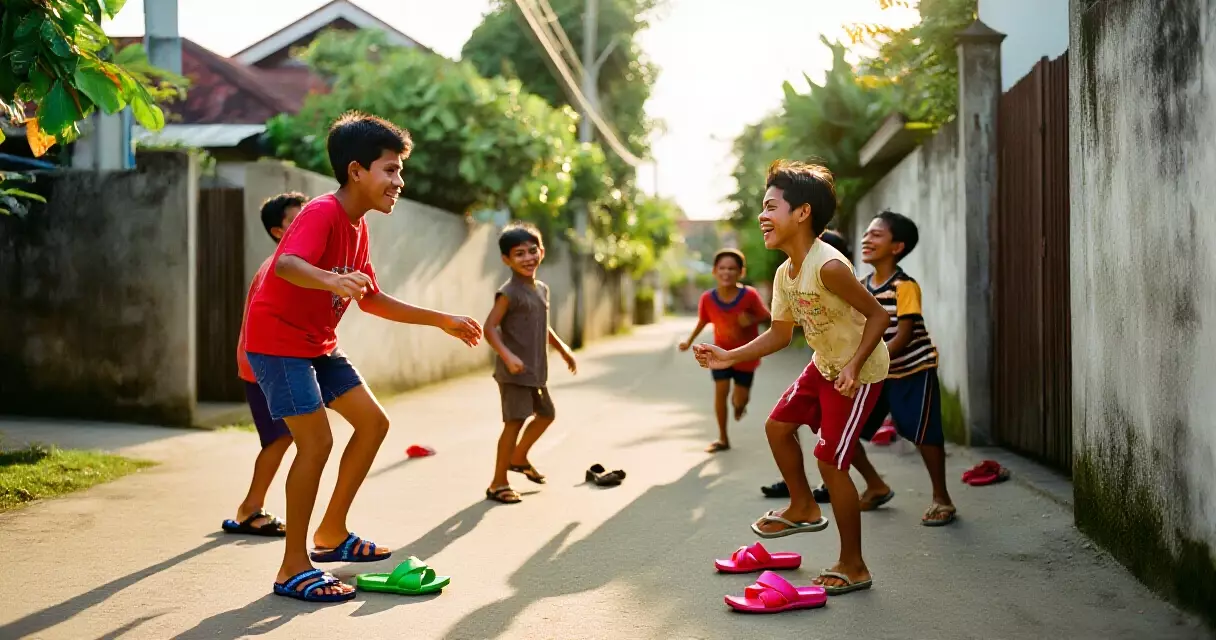
Tumbang preso is one of the most well-known 5 indigenous games that can be called a symbol of Filipino childhood. The objective is simple: knock down the can with a slipper while avoiding being caught by the “guard.” The game uses only two pieces of equipment — a can and a slipper — showcasing the Filipino trait of creatively using simple things for fun entertainment. Tumbang preso is played by three to ten players and requires coordination, throwing strength, and quick thinking.
3. Piko: The Game of Stones and Balance
Piko is the indigenous version of hopscotch. The player uses a stone or marker and steps on the lines on the ground. Each player throws the marker into the next box, then steps one foot at a time into each space. The player who reaches the end without stumbling or stepping out of the line wins. Piko is usually a favorite game of girls but is played by all genders.
4. Sipa: The Former National Game
Sipa was the former national game of the Philippines until 2009, according to information from Twinkl Philippines. It is a game commonly played by boys, where the “sipa” — a toy made from a coin (usually a five-centavo coin) with a tied plastic straw, or a ball made of rattan — must be kept in the air. The player must not let the sipa fall to the ground; it must be kicked up again using the foot or part of the knee. The highest number of kicks determines the winner.
5. Luksong Baka: The Filipino Leapfrog
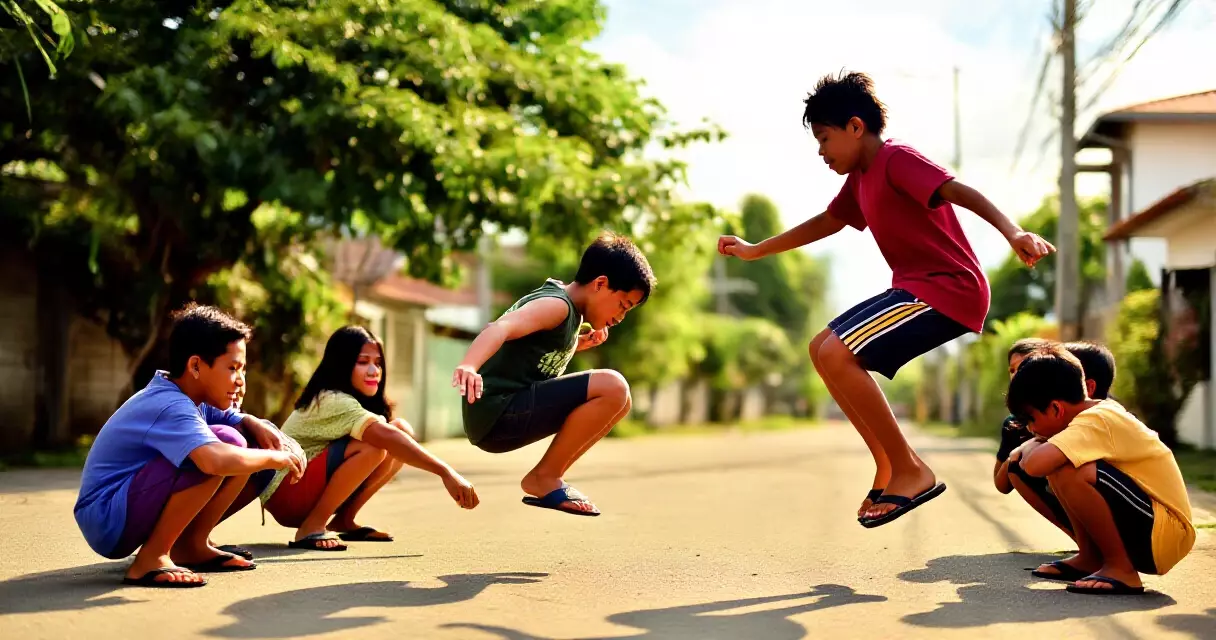
Luksong baka is a popular variation of luksong tinik, and it is the Filipino version of leapfrog, according to Wikipedia. One player bends down while the others step and jump over him. As the game progresses, the bent player gradually stands to make the jump more challenging. The player who touches the “baka” (the crouched person) becomes “it” next. The game promotes physical strength, coordination, and courage.
Comparison of 5 Indigenous Games: Table of Characteristics
Here is a quick comparison of each game to help you choose the best one for your group.
| Game | Number of Players | Equipment | Suitable For | Activity Level |
|---|---|---|---|---|
| Patintero | 6–10 | Chalk or charcoal | All genders | High |
| Tumbang Preso | 3–10 | Can, slippers | All genders | High |
| Piko | 2–6 | Stone or marker | Girls (and all) | Moderate |
| Sipa | 1–10 | Sipa (coin + straw) | Boys | Moderate |
| Luksong Baka | 3–10 | None | All genders | High |
Other Popular Indigenous Games of the Philippines
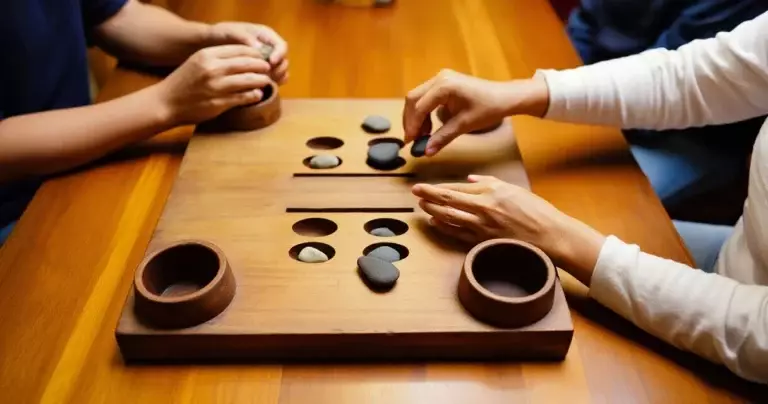
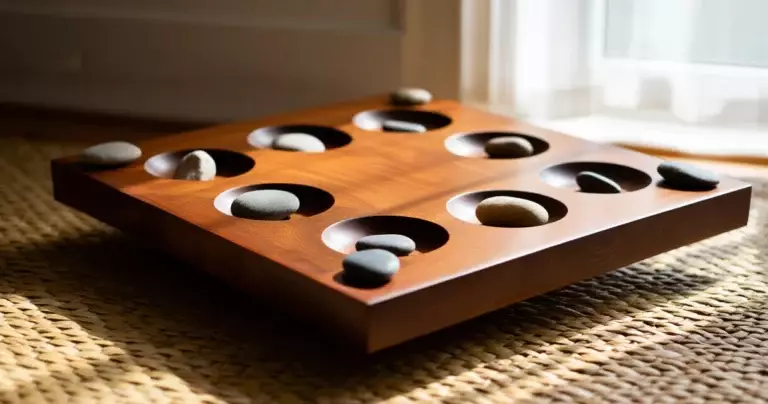
Beyond the 5 indigenous games mentioned above, there are many more traditional games that are part of Filipino culture. These include sungka — a strategic two-player game using a wooden board with seven small holes on each side and two larger “heads” at each end, according to Twinkl Philippines. It uses small stones, shells, or seeds as pieces. Sungka invites deep thinking and strategy, which is why it is known as the “chess of the Philippines” by some.
Other popular games include syatong (using short and long sticks), taguan (Filipino hide-and-seek), langit-lupa (must be on a higher place to avoid being caught), chinese garter (stepping and jumping over an elastic band while raising it), and jack ‘n poy (similar to rock-paper-scissors). For those who want to learn about other Filipino games, you can explore the Top 5 Most Downloaded Mobile Games in the Philippines as a comparison of modern and traditional entertainment.
“The indigenous games of the Philippines are not just entertainment — they are a living museum of our values, unity, and culture.”
Benefits of Playing Indigenous Games
Playing the 5 indigenous games and other traditional games provides many benefits to children and youth:
- Physical Health: Games like patintero, luksong baka, and tumbang preso require active movement — running, jumping, and throwing — which strengthens the body.
- Social Skills: Each game is played with others, promoting cooperation, equal participation, and conflict resolution.
- Cultural Identity: Knowing and playing indigenous games strengthens love and recognition of one’s culture.
- Creativity: Many games use simple materials found around, developing creative thinking.
- Affordable Entertainment: No money or technology is needed to play — a big advantage for all family classes.
Comparison: Indigenous Games vs. Modern Digital Games
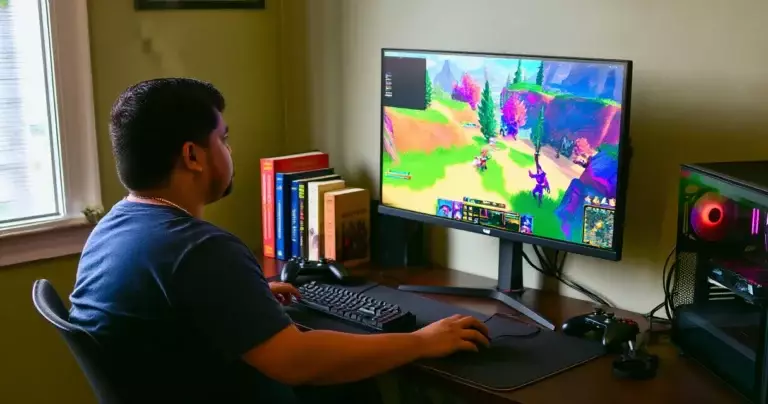
Today, many young Filipinos are more familiar with mobile games than indigenous games. Both types of entertainment have their value, but it is important to understand the differences to help parents and teachers choose the right balance.
| Aspect | Indigenous Games | Modern Digital Games |
|---|---|---|
| Cost | Free or almost free | May require device and data |
| Physical Activity | High | Low to moderate |
| Social Interaction | Face-to-face | Online or solo |
| Culture | Filipino identity | Usually international |
| Equipment | Simple materials | Smartphone, PC, console |
| Accessibility | For everyone | Requires a device |
How Indigenous Games Are Lived Out in Schools and Festivals
According to a report by NET25 News, indigenous games were showcased at the Kadayawan Festival in Davao City as part of the celebration of Filipino culture. Such opportunities provide space for the younger generation to learn about their heritage. In many schools in the Philippines, indigenous games are also incorporated into the Physical Education (PE) curriculum as a way of valuing and preserving Filipino culture.
For those interested in participating in gaming events and cultural activities in the Philippines, you can read about the Highlights of Good Game Con 2026 where modern gaming and Filipino culture are combined in one venue.
“With each generation playing patintero and tumbang preso, a piece of our Filipino identity is preserved and passed on to the future.”
Frequently Asked Questions About the 5 Indigenous Games
What are the most popular indigenous games of the Philippines?
Based on research by Samahang Makasining and Twinkl Philippines, the most popular are patintero, tumbang preso, piko, sipa, and luksong baka. Following these are syatong, taguan, chinese garter, langit-lupa, and sungka. Each has a unique way of playing and requires different skills.
Why are indigenous games called “Laro ng Lahi”?
The term “Laro ng Lahi” was established by Samahang Makasining (Artist Club), Inc. to give official recognition to traditional Filipino games as part of the racial identity. The word “lahi” means “race” or “nation,” indicating that these games are not just entertainment but symbols of Filipino culture.
Is sipa the national game of the Philippines?
Sipa was once considered the national game of the Philippines but this status changed in 2009, according to Twinkl Philippines. Currently, arnis has become the national sport and martial art of the Philippines under Republic Act 9850 signed in 2009. However, sipa remains one of the most recognized Filipino games.
How is tumbang preso played?
In tumbang preso, there is a “guard” who watches over a can standing in the middle. The players have their slippers and try to knock down the can. When the can is knocked down, the guard must set it up again before catching the players. The player caught by the guard before the can is set up becomes the new guard.
How many players are needed for patintero?
Patintero is usually played by six to ten players, divided into two groups: the “it” (line guards) and the players trying to pass through. The more players, the more fun and challenging the game. The minimum is four players to maintain the proper dynamics of the game.
Where can resources be found to learn indigenous games?
There are many sources of information about the indigenous games of the Philippines. Twinkl Philippines provides detailed guides for each game for teachers and parents. Wikipedia has a comprehensive list of traditional Filipino games. For video demonstrations, YouTube has many tutorials from various Filipino content creators. Samahang Makasining is also one of the leading authorities in preserving this knowledge.
Summary: The Importance of 5 Indigenous Games in 2026
In today’s age filled with digital entertainment, the 5 indigenous games of the Philippines remain highly valuable — not just as entertainment, but as carriers of Filipino culture to future generations. Patintero, tumbang preso, piko, sipa, and luksong baka are games that are free, group-oriented, and promote physical health and social connections. Despite the challenge of modern technology, they continue to be used in schools, festivals, and communities across the country. For more news and guides about gaming in the Philippines, visit MLBB Meta 2026 and discover how the gaming landscape of the country continues to evolve.
- The 5 indigenous games are free and do not require special equipment.
- They promote unity, physical health, and cultural identity.
- Sipa was the national game of the Philippines until 2009.
- Many indigenous games are almost forgotten and need to be revived among the youth.
- They are lived out in schools, festivals, and communities across the Philippines.
References
- Traditional games in the Philippines — Wikipedia — retrieved on July 7, 2026
- Laro ng Lahi | Wiki | Twinkl Philippines — retrieved on July 7, 2026
- Laro ng Lahi — Samahang Makasining (Artist Club), Inc. — retrieved on July 7, 2026