Summary
✓Reviewed by Emma Thompson The traditional Filipino outdoor games of the past — patintero, tumbang preso, luksong tinik, holen, jackstone — are deeply familiar to those who grew up on the streets and backyards of every province and city in...
Table of contents
- 1 Why We Want to Bring Back Traditional Filipino Outdoor Games
- 2 A Brief History: How Traditional Filipino Outdoor Games Grew
- 3 Traditional Filipino Outdoor Games You Can Now Play on Your Phone
- 3.1 1. Patintero
- 3.2 2. Tumbang Preso
- 3.3 3. Dama (Filipino Checkers)
- 3.4 4. Jack-en-Poy (Bato-Bato-Pik)
- 3.5 5. Jackstone
- 3.6 6. Holen (Marble Games)
- 4 Table: Traditional Filipino Outdoor Games and Their Mobile Counterparts
- 5 Traditional Filipino Outdoor Games on Mobile: The Role of Government
- 6 How to Choose the Right Mobile Game for Each Traditional Game
- 7 Table: How Similar the Mobile and Real Game Are
- 8 Traditional Filipino Outdoor Games on Mobile: For Children and Youth
- 9 Communities and Initiatives Promoting Filipino Games in the Digital Era
- 10 Frequently Asked Questions About Traditional Filipino Outdoor Games You Can Play on Your Phone
- 10.1 Is there an official “Larong Pinoy” app on Google Play?
- 10.2 Are the mobile versions of Filipino games free?
- 10.3 Can mobile versions of Filipino games be used in the classroom?
- 10.4 Which Filipino game is the easiest to play on a cellphone?
- 10.5 Can mobile versions of Filipino games be played multiplayer?
- 10.6 Why is it important for youth to know traditional Filipino outdoor games?
- 11 Summary: Key Takeaways
- 12 References
The traditional Filipino outdoor games of the past — patintero, tumbang preso, luksong tinik, holen, jackstone — are deeply familiar to those who grew up on the streets and backyards of every province and city in the Philippines. Despite the arrival of smartphones and tablets, these games are not merely living in memory: many of them can now be found in various mobile apps that can be downloaded and played anywhere. This article is a guide to traditional Filipino outdoor games from the past that you can now play on your phone — which ones are available, how to play them, and why it matters to reintroduce these games to the new generation.
Why We Want to Bring Back Traditional Filipino Outdoor Games
Traditional Filipino games are not simply pastimes — they are part of our culture and identity as a nation. According to an academic study from the Journal of Tourism, Hospitality and Physical Education (2026), one of the most significant non-governmental initiatives for preserving these games is the Larong Pinoy Program of the Magna Kultura Foundation, which uses patintero, tumbang preso, and luksong tinik in play camps and outreach events. However, the same study acknowledges that despite many programs, the former popularity of these games has not been fully restored — especially among youth who are more accustomed to digital gaming.
This is where mobile gaming enters as a bridge. If today’s youth are more comfortable with a cellphone than a backyard, the solution is not to force them back outside — but to bring the spirit of those games to the platform they use every day.
A Brief History: How Traditional Filipino Outdoor Games Grew
Traditional Filipino games have a long history that predates smartphones. According to the International Journal of Multidisciplinary: Applied, in 2007 a Senate Bill 1813 was proposed — the Traditional Games and Sports Act — mandating the inclusion of traditional games in the P.E. curriculum at all levels of education. These games were well-known in past decades as part of daily Filipino life: on street corners, in school yards, and on roads after class. They were not merely entertainment — they were instruments of unity, physical activity, and community bonding.
Traditional Filipino Outdoor Games You Can Now Play on Your Phone
Here are the primary traditional Filipino games that now have mobile game counterparts or digital adaptations. This list is based on games specifically mentioned in legislative and academic documents from the Philippines.
1. Patintero
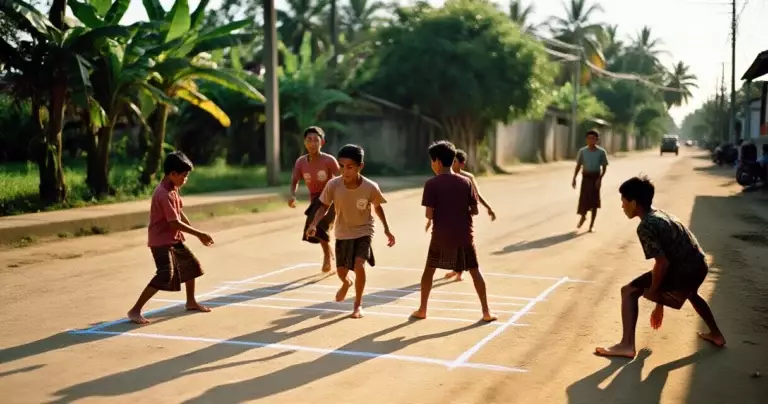
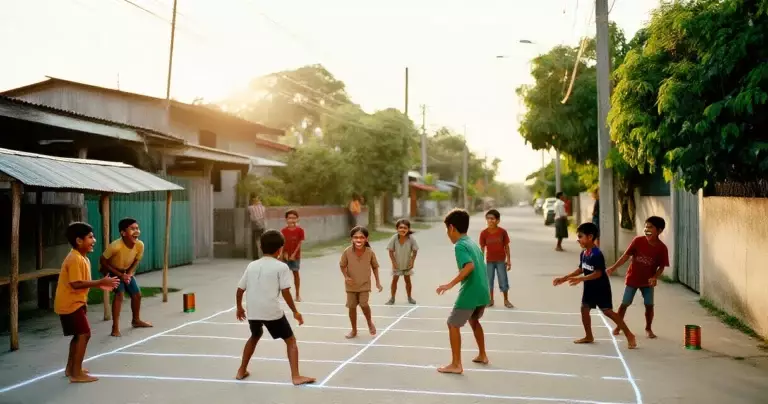
One of the most familiar Filipino games, patintero is a group game where players try to pass through lines guarded by opponents. On mobile, many “grid-based runner” and “maze evasion” games draw from the same concept — the guards create lines of defense while others attempt to break through. Apps like Line Defense and other pixel puzzle games on Google Play provide an experience close to the mechanics of patintero.
2. Tumbang Preso
In this game, the goal is to knock down a tin can using a slipper while avoiding the player standing guard. On mobile, there are aiming and target-knocking games with nearly identical mechanics — a target that must be knocked down from a distance while avoiding obstacles. Even without an official “Tumbang Preso” app, this genre is widespread in mobile gaming.
3. Dama (Filipino Checkers)
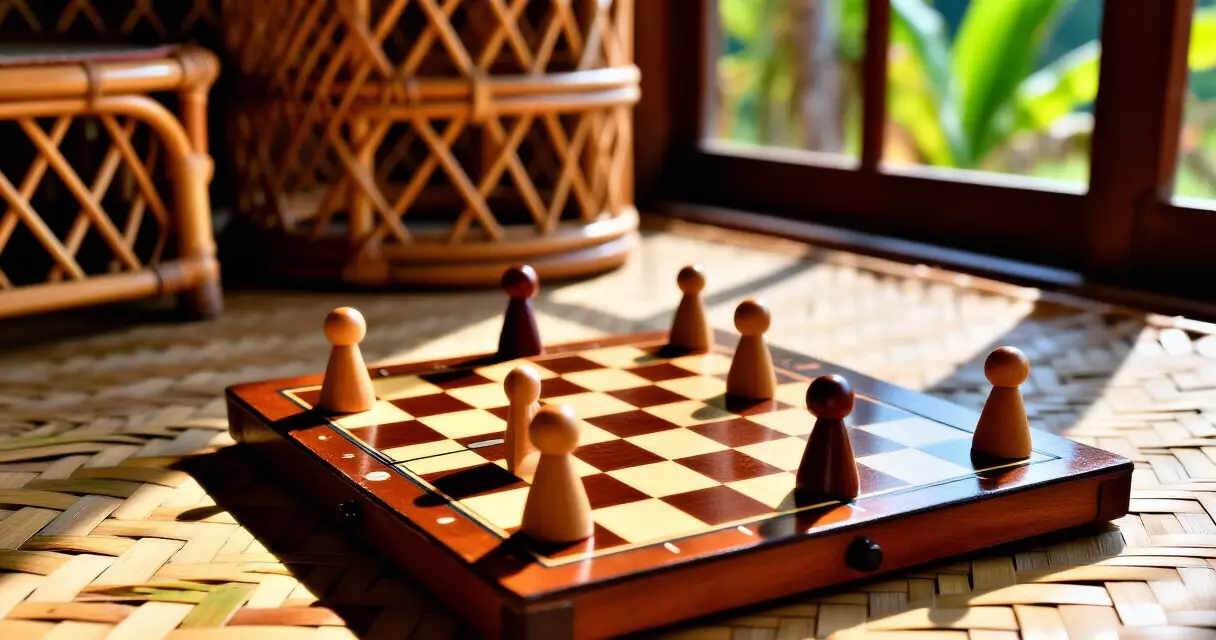
Dama is the Filipino version of draughts or checkers, and it is one of the traditional games with the most direct digital adaptations. “Dama” can be found as a free app on Google Play — with multiplayer mode and an AI opponent for solo play. It is also one of the games specifically mentioned in legislative documents of the Philippine Senate as part of cultural heritage that should be protected.
4. Jack-en-Poy (Bato-Bato-Pik)
Jack-en-poy or bato-bato-pik is the Filipino version of Rock-Paper-Scissors. On mobile, this is one of the easiest to find — almost every “RPS” app on the App Store and Google Play uses the exact same mechanics. Some apps specifically use Filipino naming and aesthetics for this game.
5. Jackstone
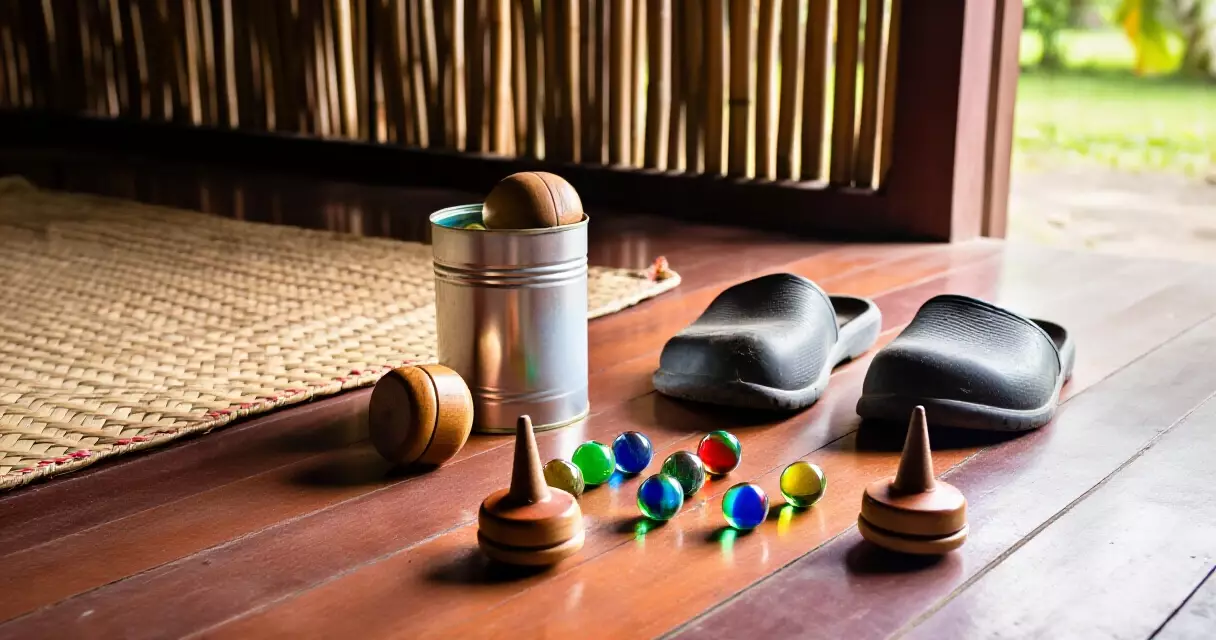
Jackstone is a dexterity game where the player tosses a ball and picks up jacks at the right moment. On mobile, there are “Jacks” and “pick-up game” apps that replicate the timing-based mechanics of this game — requiring quick reflexes and pattern recognition, just like the original.
6. Holen (Marble Games)
Holen is one of the most nostalgic games for Filipinos — collecting and playing with marbles on the ground. On mobile, the “marble shooter” and “billiards-style games” genre directly draws from the same mechanics: aiming accuracy, ball trajectory, and competing for resources. Marble Blast and similar apps are available for free.
Table: Traditional Filipino Outdoor Games and Their Mobile Counterparts
| Traditional Game | Game Type | Mobile App / Genre | Platform |
|---|---|---|---|
| Patintero | Group, grid-based | Grid Runner / Maze Evasion games | Android, iOS |
| Tumbang Preso | Aiming, target | Can Knockdown, Target Throw games | Android, iOS |
| Dama | Board game, strategy | Dama (free app on Google Play) | Android |
| Jack-en-Poy | Hand gesture | Rock-Paper-Scissors apps | Android, iOS |
| Jackstone | Dexterity, timing | Jacks / Pick-up Sticks games | Android, iOS |
| Holen | Marble shooter | Marble Blast, billiards games | Android, iOS |
| Turumpo | Spinning, dexterity | Gyro / Spinner games | Android, iOS |
| Syato | Batting, reflexes | Cricket / bat-and-ball mini-games | Android, iOS |
Traditional Filipino Outdoor Games on Mobile: The Role of Government
It is not only nostalgia driving the renewed interest in these traditional games. According to the Senate of the Philippines, a Traditional Games and Sports Act has been proposed that aims to include games such as agawang sulok, araw-lilim, garter, taguan, tatsing, tumbang preso, turumpo, and many others in the P.E. curriculum at all levels of education. Agencies such as DepEd, CHED, PSC, NCCA, and NCIP are involved in implementing such programs.
The goal of such a policy is not merely physical activity — it is about preserving cultural identity. When today’s youth play dama or patintero on their phones, even in digital form, the culture remains alive.
Changing the medium does not mean forgetting the game — the cellphone may well be the new backyard for the next generation of Filipinos.
How to Choose the Right Mobile Game for Each Traditional Game
Not all apps with names similar to a traditional game are truly equivalent to it. Here are the steps to find the most suitable mobile game counterpart:
- Search Google Play or the App Store for the exact name of the game — there are apps that use Filipino names like “Dama”, “Patintero”, and “Tumbang Preso”. Check reviews and ratings before downloading.
- If unavailable, search for the closest genre — for example, for holen, “marble shooter” or “pool/billiards” games are the most suitable.
- Check age-appropriate games — traditional Filipino games are family-oriented, so choose apps rated “Everyone” or “3+” so the whole family can play together.
- Test for offline mode — many Filipinos have limited data, so offline-capable games are more practical.
- Continue to the physical version — use the mobile game as a conversation starter, then try the real version with friends or family outdoors.
Table: How Similar the Mobile and Real Game Are
| Traditional Game | Mechanics Carried Over to Mobile | Mechanics Missing on Mobile | Similarity Rating |
|---|---|---|---|
| Dama | Board strategy, turn-based, piece capture | Physical interaction with opponent | High (90%) |
| Jack-en-Poy | Hand gesture choices, random outcome | Reading opponent’s reaction | High (85%) |
| Holen | Aiming trajectory, marble physics | Physical feel of the marble | Moderate (70%) |
| Jackstone | Timing, reflex-based picking | Hand dexterity, real ball | Moderate (65%) |
| Tumbang Preso | Aiming, target elimination | Group dynamics, hiding | Moderate (60%) |
| Patintero | Grid movement, evasion | Physical group interaction | Low (50%) |
Traditional Filipino Outdoor Games on Mobile: For Children and Youth
According to research from Research Synergy Press (2026), the documentation and integration of cultural activities in educational settings facilitates effective teaching. Using mobile games as an entry point for traditional games is a practical way to reach today’s digital-native youth.
For parents and teachers, the mobile counterparts of these games can be used as a hook: show the digital version first, then explain the true history and mechanics of the game. The most downloaded mobile games in the Philippines today show that Filipinos are actively seeking games with local flavor — and traditional games have a natural place in that market.
Communities and Initiatives Promoting Filipino Games in the Digital Era
Beyond government, there are non-governmental groups also active in preserving these games. The Magna Kultura Foundation, according to research published in the Journal of Tourism, Hospitality and Physical Education (2026), runs the Larong Pinoy Program with play camps and outreach events using patintero, tumbang preso, and luksong tinik. These programs show that interest in traditional games remains strong — it just needs the right platform and opportunity to be played.
In the world of esports and local gaming events, traditional games are also beginning to appear as featured activities — similar to highlights at Good Game Con 2026 where Filipino gaming culture was celebrated alongside both modern and traditional games.
There is no need to choose between modern gaming and traditional games — the cellphone today can be the bridge between the two.
Frequently Asked Questions About Traditional Filipino Outdoor Games You Can Play on Your Phone
Is there an official “Larong Pinoy” app on Google Play?
There are some apps that use the name “Larong Pinoy” on Google Play, but their quality and completeness vary. For the best experience, it is better to search for each game individually — for example, “Dama Philippines” or “Filipino Checkers” for dama. Individual apps are typically more detailed and more frequently updated.
Are the mobile versions of Filipino games free?
Most mobile apps equivalent to traditional Filipino games are free to download — some have in-app ads while playing, but the core gameplay is generally free of charge. Games like dama, RPS (jack-en-poy), and marble games have many free options on both Android and iOS.
Can mobile versions of Filipino games be used in the classroom?
Yes, especially now that DepEd and CHED have policies for including traditional games in the P.E. curriculum according to the Senate of the Philippines. Mobile versions can be used as supplementary material — show the digital version, then teach the real gameplay outdoors. Many teachers use this approach to capture students’ attention.
Which Filipino game is the easiest to play on a cellphone?
The easiest to explain and play on a cellphone are dama and jack-en-poy — their mechanics are simple and transfer directly to digital format. Dama offers deep strategy for advanced players, while jack-en-poy is perfect for all ages, young and old alike.
Can mobile versions of Filipino games be played multiplayer?
Some apps have online multiplayer mode — especially board games like dama. For more physical games like patintero or tumbang preso, mobile adaptations are typically single-player or local two-player only, because group dynamics of the real game are difficult to replicate in digital format.
Why is it important for youth to know traditional Filipino outdoor games?
According to research published in Talakasaysayan (2020), traditional Filipino games are part of the country’s cultural identity. Not recognizing these games indicates a knowledge gap between generations. Beyond culture, these games provide physical activity, social bonding, and strategic thinking — skills that are valuable at any age.
Summary: Key Takeaways
- Many traditional Filipino outdoor games such as dama, holen, jackstone, and jack-en-poy have direct mobile equivalents now available on mobile phones.
- The government through DepEd, CHED, and PSC is actively promoting the inclusion of these games in education according to legislative documents from the Senate.
- The best strategy is to use mobile games as a bridge — start with the digital version, then encourage real gameplay outdoors.
- Dama and jack-en-poy are the most suitable for mobile play due to their simple mechanics that are easy to explain and play on a phone.
- Non-governmental groups such as the Magna Kultura Foundation and programs from DepEd are working to revive these games in the modern era.
References
- Talakasaysayan: Philippine Games — On the Contemporary Awareness and Continuity — retrieved September 4, 2026
- Senate of the Philippines: Traditional Games and Sports Act (Senate Bill) — retrieved September 4, 2026
- Senate of the Philippines: Indigenous Sports Competitions Bill — retrieved September 4, 2026
- Journal of Tourism, Hospitality and Physical Education: Preservation and Promotion of Philippine Traditional Games — retrieved September 4, 2026