Summary
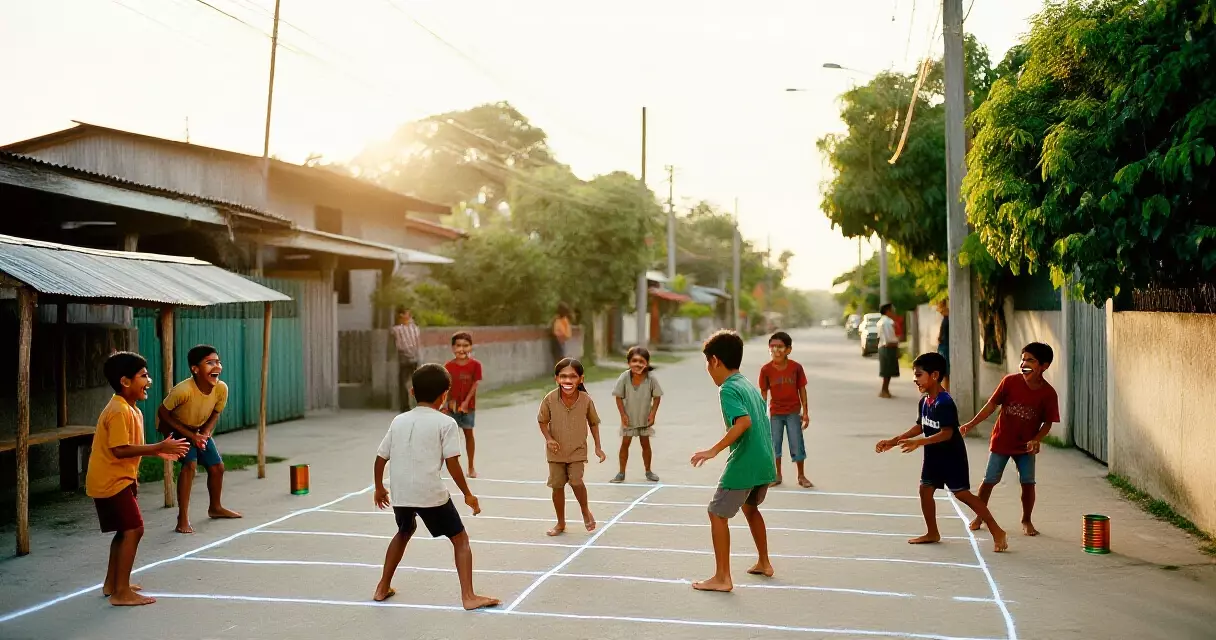
Before smartphones and fast internet arrived, children in the Philippines would run, jump, and play tag in alleys and yards every afternoon. On June 20, 2026, the traditional Filipino games example is being discussed again as part of preserving Filipino...
Table of contents
- 1 What are Traditional Filipino Games? Definition and Importance
- 2 A Brief History of Traditional Filipino Games in the Philippines
- 3 Traditional Filipino Games Example: 15 Most Popular Filipino Games
- 3.1 Strength and Jumping Games
- 3.2 Games with Cans, Stones, and Tokens
- 3.3 Team and Creative Games
- 4 Table of Traditional Filipino Games: Players, Equipment, and Skills
- 5 Traditional Filipino Games Examples with No or Minimal Equipment
- 6 Team Games vs. Individual Games
- 6.1 Team Games
- 6.2 Individual or Pair Games
- 7 Regional Variations of Traditional Filipino Games Across the Philippines
- 8 Traditional Filipino Games Example in Schools and MAPEH
- 9 Why Traditional Filipino Games are Becoming Popular Again in 2026
- 10 How to Teach and Revive Traditional Filipino Games
- 11 Frequently Asked Questions About Traditional Filipino Games Examples
- 11.1 What does traditional Filipino games mean?
- 11.2 What are the most popular examples of traditional Filipino games?
- 11.3 Which games can be played at school without equipment?
- 11.4 What is the difference between luksong baka and luksong tinik?
- 12 Summary and Important Points
- 13 References
Before smartphones and fast internet arrived, children in the Philippines would run, jump, and play tag in alleys and yards every afternoon. On June 20, 2026, the traditional Filipino games example is being discussed again as part of preserving Filipino culture, especially in schools and communities seeking alternatives to excessive screen time. In this guide, we will lay out the most well-known examples of traditional Filipino games, including the rules, number of players, equipment, and why they are becoming popular again.
According to the list of Traditional games in the Philippines, games like luksong baka, patintero, piko, and tumbang preso are primarily played as children’s games. The term “traditional Filipino games” refers to games passed down from generation to generation, often with little or no equipment, and a strong focus on physical movement, strategy, and unity.
What are Traditional Filipino Games? Definition and Importance
“Traditional Filipino games” refer to traditional Filipino games that are part of the country’s cultural heritage. They are not just for entertainment. They are a way to teach children social skills, respect for rules, body coordination, and creative thinking. In most games, the equipment is very simple: a can, slipper, rope, stone, or even none. This is why they are very easy to play even in resource-limited areas.
In the cultural context, traditional Filipino games are often considered a form of intangible cultural heritage, a perspective aligned with the framework of UNESCO regarding oral traditions and social practices. In short, each traditional Filipino game example not only provides fun but also carries the history, language, and identity of Filipinos.
Here are some of the main reasons why traditional Filipino games are important:
- Physical activity that strengthens the body and reduces sedentary lifestyle.
- Development of skills in cooperation, role distribution, and respect for fellow players.
- Preservation of native language through game names and accompanying songs.
- Affordable entertainment that does not require electricity, gadgets, or expensive equipment.
- Reinforcement of Filipino identity in the face of increasing digital games.
A Brief History of Traditional Filipino Games in the Philippines
Traditional Filipino games existed before digital games arrived. Many games like patintero, sipa, and piko have been orally passed down for generations, resulting in different rules and names depending on the region. According to documentation from Traditional games in the Philippines, these games have long been considered part of the daily life of Filipino children, often played on streets, plazas, or school yards.
In recent decades, television, computer games, and mobile gaming have gradually replaced the time once spent outdoors. However, due to cultural programs by agencies like NCCA and the inclusion of traditional Filipino games in the MAPEH curriculum, these games have been given renewed attention as educational tools and heritage preservation. In 2026, there is a resurgence of interest due to community celebrations, school competitions, and even online videos teaching the correct mechanics of the games.
Traditional Filipino Games Example: 15 Most Popular Filipino Games
Here is the most comprehensive list of traditional Filipino games examples commonly played in different parts of the country. For each game, we provided a brief description of the mechanics to make it easy to teach even to beginners.
Strength and Jumping Games
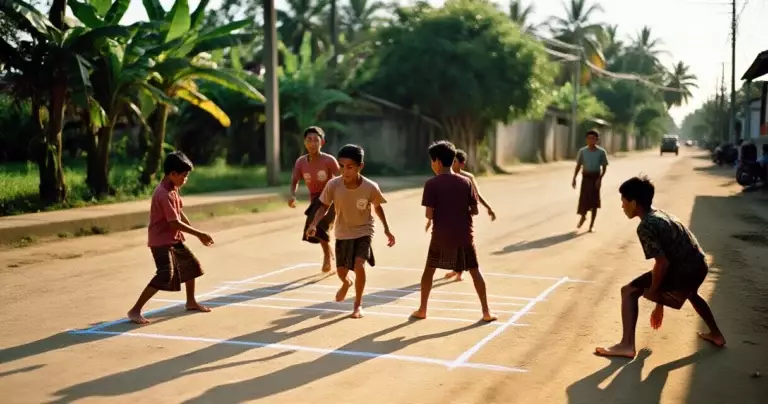
- Patintero – also known as harangang taga, a team game with two groups: those guarding the lines and those trying to cross without getting caught.
- Luksong baka – a variation of luksong tinik where a player bends over as the “cow” and others jump over; the one who touches becomes the next player.
- Luksong tinik – played by jumping over the “thorns” made up of overlapping hands and feet of two players.
- Luksong lubid – or jumping rope, which hones timing, coordination, and endurance as players jump over a rotating or stretched rope.
- Sipa – one of the well-known youth games where a small object is kicked upwards to prevent it from falling to the ground.
Games with Cans, Stones, and Tokens
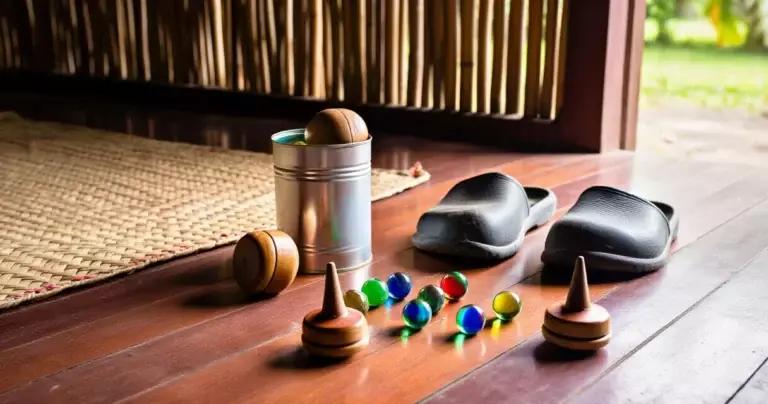
- Tumbang preso – uses a can and slipper as tokens; players aim to knock down the can while the “prisoner” or player defends it.
- Piko – played on the ground or floor with drawn boxes; players jump while avoiding stepping on the line and the token.
- Holen or marble – a popular game among Filipino children using small glass balls aimed at each other.
- Siyato or pitiw – well-known in the Visayas, played by two opponents using small sticks.
- Palo sebo – usually played during festivals; players climb a tall greased bamboo to reach the prize at the top.
Team and Creative Games
- Agawan base – the Filipino version of tag with two teams defending their base while trying to catch the opponent.
- Bahay-bahayan – a role-playing game where children mimic family roles and daily life.
- Jack-en-poy – the local version of rock-paper-scissors commonly used to decide who will be the first player.
- Langit-lupa – a catching game combining speed and strategy; players are safe when on a high place or “heaven.”
- Taguan – one of the simplest games where players hide while the seeker searches for them.
When combined, these examples show the wide range of traditional Filipino games: from physical jumping to strategy and creative play. This contrasts with modern digital entertainment as discussed in our guide on Top 5 Mobile Games in the Philippines, but both aim to provide fun and social interaction.
Table of Traditional Filipino Games: Players, Equipment, and Skills
To make it easier to compare each traditional Filipino game example, here is a table containing the estimated number of players, required equipment, and main skills developed. This information is derived from the usual descriptions of games in Traditional games in the Philippines and educational materials from MAPEH.
| Game | Number of Players | Equipment | Main Skills |
|---|---|---|---|
| Patintero | 6 or more (2 teams) | Lines on the ground | Speed, strategy, teamwork |
| Tumbang preso | 3 or more | Can and slipper | Timing, aim |
| Luksong baka | 3 or more | None | Leg strength, jumping |
| Piko | 2 or more | Lines and token | Balance, coordination |
| Sipa | 1 or more | Sipa or bulalakaw | Foot control, persistence |
| Agawan base | 6 or more (2 teams) | 2 bases | Strategy, speed |
| Luksong lubid | 3 or more | Rope | Timing, endurance |
| Jack-en-poy | 2 | None | Quick decision-making |
Note that most of these games require three or more players, highlighting the deep connection of traditional Filipino games to social interaction and community building. Only a few, like sipa and jack-en-poy, can be played alone or with a partner.
Traditional Filipino Games Examples with No or Minimal Equipment
One of the reasons why traditional Filipino games are so practical is their ability to be played even without expensive equipment. This is important especially for teachers and activity organizers with limited budgets. Here are some examples of games that require almost no materials.
| Game | Required Equipment | Ideal Place to Play |
|---|---|---|
| Taguan | None | Yard or room with hiding places |
| Langit-lupa | None | Place with high and low areas |
| Luksong baka | None | Flat and wide space |
| Jack-en-poy | None | Anywhere |
| Bahay-bahayan | None or makeshift items | Yard or corner of the home |
| Agawan base | Two markers as bases | Wide yard or playground |
Due to this simplicity, these games can easily be incorporated into school activities, family day, or community gatherings. Unlike modern setups for esports described in our coverage of Good Game Con 2026, traditional Filipino games only require space and the enthusiasm of the players.
Team Games vs. Individual Games
It is important to understand the differences between types of traditional Filipino games to choose the right one for the number of players and the purpose of the activity. There are games focused on teams and those focused on individual skills.
Team Games
Games like patintero, agawan base, and batuhang bola require two or more teams. Here, skills in communication, leadership, and cooperation are developed. Each player has a role: some in blocking, some in attacking, and some in defending the base. This is why teachers often choose team games for activities aimed at strengthening teamwork.
Individual or Pair Games
On the other hand, sipa, holen, siyato, and jack-en-poy can be played alone or with a partner. Here, personal excellence, aim, and concentration are measured. These games are ideal when there are only a few players or when one wants to challenge their own record. This variation in the form of play is also part of the broader Filipino culture of competition, which can be seen even in competitive scenes as discussed in MLBB Meta 2026.
Regional Variations of Traditional Filipino Games Across the Philippines
Because they have been orally passed down for many generations, the rules and names of some games vary depending on the region. This is one of the most interesting characteristics of traditional Filipino games: the same game can have different forms in Luzon, Visayas, and Mindanao.
- Luzon – patintero is popular, especially in Bulacan where it is widely popular; piko and tumbang preso are also common in cities and provinces.
- Visayas – siyato or pitiw is well-known among Bisaya children, a game using small sticks with emphasis on aim and timing.
- Mindanao and other regions – have their own variations of catching and jumping games, often included in local celebrations and festivals.
This diversity shows that traditional Filipino games are not fixed in one form but are alive and continue to evolve according to local culture. For researchers and teachers, understanding regional variations helps preserve the richness of this heritage in its entirety and truth to its origins.
Traditional Filipino Games Example in Schools and MAPEH
In the current curriculum, traditional Filipino games are part of MAPEH, particularly in Physical Education, where traditional Filipino games are taught as a form of physical activity and cultural appreciation. Educational programs by the DepEd often include target games, striking games, and running games derived from native games.
Here is how traditional Filipino games are commonly integrated into schools:
- As part of PE class to promote regular physical movement.
- As an activity during Language Month and other cultural celebrations.
- As a competition between sections or grades during field day or sports fest.
- As a project in Social Studies to study heritage and history.
When teaching traditional Filipino games examples in the classroom, it is important for the teacher to emphasize safety, clear rules, and equal opportunities to participate. In this way, the games become classroom-ready and accidents are avoided, especially in games involving jumping and running.
Why Traditional Filipino Games are Becoming Popular Again in 2026
Despite the proliferation of mobile and online gaming, there is a clear resurgence of interest in traditional games in 2026. Here are some of the main trends observed across the country.
- More school and community programs are reviving palo sebo, agawan base, and other community games.
- The number of instructional videos and modules teaching the correct mechanics of patintero, piko, and tumbang preso is increasing.
- Traditional Filipino games are increasingly seen as cultural heritage and not just simple children’s entertainment.
- The wellness angle is strengthening: it is considered a healthy alternative to excessive screen time.
- Native names of the games are more frequently used to preserve language and identity.
This resurgence is interesting because it is happening alongside the growth of digital and esports communities in the country. While modern games continue to expand as described in our report on Honor of Kings in the Philippines, respect for traditional games as part of the broader Filipino gaming culture is also growing.
How to Teach and Revive Traditional Filipino Games
It is not enough to just know the examples of traditional Filipino games. It is important to actively teach and pass them on to the next generation. Here are practical steps for parents, teachers, and community organizers.
- Start with simple games without equipment, like taguan or langit-lupa, to easily involve everyone.
- Clearly explain the rules before starting, including safety guidelines.
- Use the native names of the games and teach the accompanying songs to preserve the language.
- Organize small competitions in the community or school to increase interest.
- Document the games through photos or videos to teach them online as well.
Through these steps, the heritage becomes alive instead of just a record in books. Many cultural organizations and local governments also offer events where traditional Filipino games can be witnessed, such as public games often part of local celebrations and conventions as discussed in our guide on Geek Pop PICCS and Resbak 2026.
Frequently Asked Questions About Traditional Filipino Games Examples
What does traditional Filipino games mean?
Traditional Filipino games refer to traditional Filipino games passed down from previous generations. They are part of cultural heritage and are usually played by children using simple or no equipment.
What are the most popular examples of traditional Filipino games?
Among the most well-known are patintero, tumbang preso, luksong baka, piko, sipa, and agawan base. These often appear in educational materials as examples of traditional Filipino games.
Which games can be played at school without equipment?
Taguan, langit-lupa, luksong baka, jack-en-poy, and bahay-bahayan are ideal because they require almost no equipment. A wide space and clear rules are enough.
What is the difference between luksong baka and luksong tinik?
In luksong baka, a player bends over as the “cow” and others jump over. In luksong tinik, the “thorns” are made up of overlapping hands and feet of two players, which are jumped over.
Summary and Important Points
Traditional Filipino games are more than just simple entertainment. They are a living heritage that teaches physical skills, social interaction, and love for Filipino culture. In exploring various traditional Filipino games examples, we see how rich and creative the gaming tradition in the country is.
- Traditional Filipino games are traditional Filipino games passed down through generations and part of cultural heritage.
- Main examples include patintero, tumbang preso, luksong baka, piko, sipa, and agawan base.
- Most games require only simple or no equipment, making them practical in schools and communities.
- Rules and names vary by region, from Luzon to Visayas and Mindanao.
- They are becoming popular again in 2026 due to educational programs, community celebrations, and the wellness angle.
As we look back on these games on June 20, 2026, we encourage every parent, teacher, and youth to play and teach traditional Filipino games again. Through simple running, jumping, and laughing in the yard, we pass on a heritage that no gadget can replace.
References
- Traditional games in the Philippines – Wikipedia – retrieved June 20, 2026
- National Commission for Culture and the Arts (NCCA) – retrieved June 20, 2026
- Department of Education (DepEd) – retrieved June 20, 2026
- UNESCO Intangible Cultural Heritage – retrieved June 20