
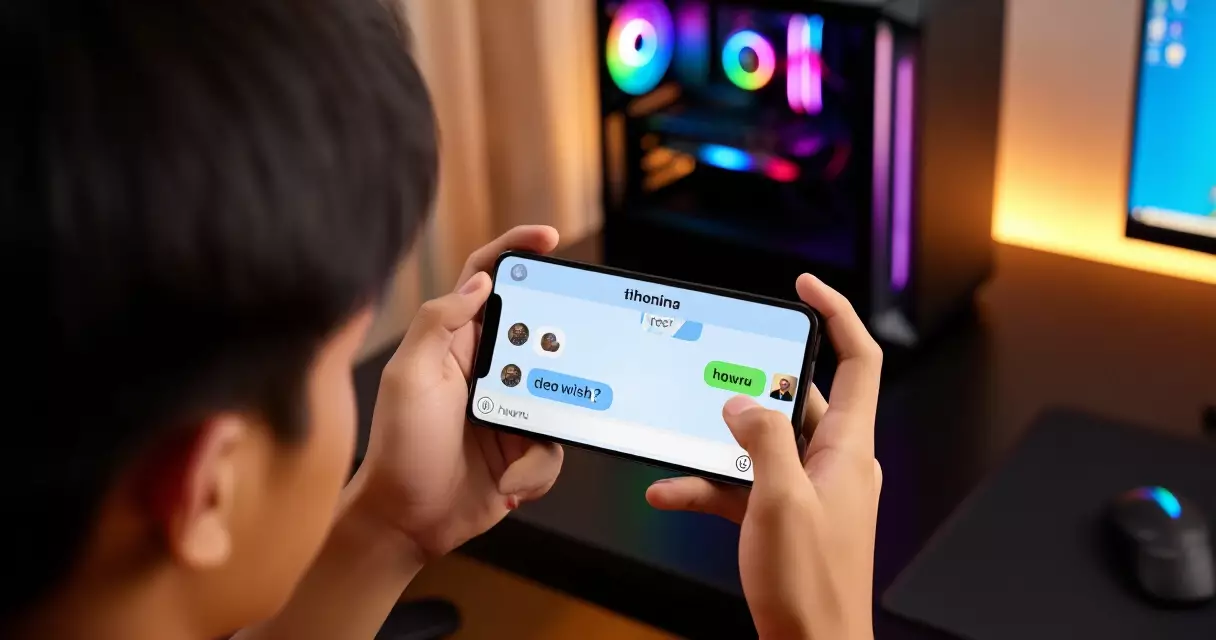
Summary
In a country long considered one of the heaviest users of mobile messaging worldwide, it is not surprising that a short word like howru has become a common sight in our chat boxes and game lobbies. Howru, a shortened form...
Table of contents
- 1 What Does Howru Mean?
- 1.1 Is howru formal or informal?
- 2 Origin: A Brief History of Texting Slang in the Philippines
- 3 How Howru is Used in Chat and Texting
- 4 Howru and the Culture of Code-Switching in the Philippines
- 4.1 Why do Filipinos love abbreviations?
- 5 Common Abbreviations Alongside Howru
- 6 Howru in Gaming Chat and Online Games
- 6.1 Game-specific abbreviations
- 7 What Research Says About Text Slang
- 8 Howru vs. Filipino Greetings: Kamusta and OL ka ba
- 9 Frequently Asked Questions About Howru
- 9.1 What does howru mean?
- 9.2 Is howru Filipino slang?
- 9.3 Is howru still popular in 2026?
- 9.4 Why do Filipinos use many abbreviations online?
- 10 Conclusion: Howru as Part of Filipino Online Language
- 11 References
In a country long considered one of the heaviest users of mobile messaging worldwide, it is not surprising that a short word like howru has become a common sight in our chat boxes and game lobbies. Howru, a shortened form of the question «how are you?», is one of the thousands of compressed expressions used by Filipinos daily. According to a study published in PhilArchive in 2025, 45.37% of the surveyed students «often» use this type of TXT slang in their online communication, with an overall mean of 3.73 (SD = 0.72). This shows that this language is not just a passing trend but a solid part of the daily conversation of Filipinos.
As of June 20, 2026, these expressions have spread even further due to the shift in communication from old SMS to Messenger, TikTok comments, and gaming chat. In this guide, we will delve deeper into what howru is, how it is used, its history within Filipino culture, and how it connects to the broader world of gaming and online communication. This article aims to provide you with a practical, evidence-based understanding of the digital language that is now part of the life of almost every Filipino smartphone user.
What Does Howru Mean?
Howru is an informal and shortened spelling of the question «how are you?». Instead of forming the entire phrase, users combine the words to make it quick and easy to type on a phone keyboard. It falls under the category of what is called textspeak or chat language, where speed and convenience are the primary goals rather than formal writing. Although its form originated in English, it has become part of the daily repertoire of Filipinos accustomed to mixing English and Filipino in a single message.
It is important to clarify that howru is not exclusively Filipino slang. It is a global form of textspeak used in other countries as well. However, in the context of the Philippines, it is best understood as part of a broader system of abbreviations and code-switching that includes local forms such as «wer na u?», «OL ka ba?», and «SLR». In short, howru is just one piece of a vast puzzle of Filipino digital language. According to the Wikipedia entry on SMS language, these compressed forms emerged in response to character count limitations and the need for speed in mobile messaging.
Is howru formal or informal?
Howru is entirely informal. It is not suitable for formal writing such as business emails, academic papers, or official documents. Instead, its natural habitat is casual chat between friends, quick check-ins with a partner or family member, and rapid message exchanges within games. Using howru in the wrong context, such as in a professional setting, may appear to lack seriousness. Therefore, it is important to know when it is appropriate to use.
Origin: A Brief History of Texting Slang in the Philippines
To fully understand howru, we need to look back at the history of texting in the Philippines. In the late 1990s and early 2000s, the use of Short Message Service or SMS exploded in the country. Since each message was limited to 160 characters and came with a cost, Filipinos learned to abbreviate to save money and space. This gave birth to many forms of textspeak that are still alive in our conversations today.
When communication shifted from SMS to social media like Facebook and Messenger, these forms did not disappear but rather transitioned with it. The «wer na u?» that was once textspeak became common in chat as well. According to a morphological analysis published in Philippine E-Journals, Filipino slang words are created as neologisms through processes such as abbreviation, syllable reversal, and adaptation. Howru is a clear example of this abbreviation process in digital language.
Now in 2026, this evolution continues. From an SMS-centered environment, we have moved to a multiplatform world where Messenger, TikTok, and gaming chat coexist. Old forms like howru remain understood, but alongside them, new slang brought by social media culture continues to emerge. This history shows that Filipino online language is always alive and moving, never frozen in one form.
How Howru is Used in Chat and Texting
In practical use, howru often serves as an opener or conversation starter. It is a quick way to express that you want to talk or check on someone without having to type a long sentence. It is commonly used at the start of a chat session, especially when two people haven’t talked in a while. It can also serve as a polite way to show concern or check on a friend going through a problem.
Here are some typical situations where howru naturally appears:
- Chat opener: «Hey howru? It’s been a while since we talked.»
- Quick check-in with family: «Howru there in the province? How’s the weather?»
- Showing concern for a friend: «Howru? Hope you’re okay after what happened.»
- In-game: «Howru team? Are you ready for the next round?»
The speed and casual tone of howru make it suitable for quick message exchanges. In popular mobile games, for example, where communication needs to be fast, such short expressions are useful. For those looking for games with an active chat community, our list of most downloaded mobile games in the country this year can help.
It is important to remember that context and relationship dictate how appropriate howru is. Among close friends, such abbreviations are normal and endearing. But if you are talking to someone you want to show great respect to, the more complete form of greeting is still preferable. The ability to read the situation is part of the digital literacy that Filipinos have developed over time.
Howru and the Culture of Code-Switching in the Philippines
One of the most distinctive features of Filipino digital language is code-switching, or the mixing of English and Filipino in a single phrase. Howru often appears alongside Filipino elements in the same message, creating a hybrid register that is natural to Filipinos. For example, a full message might be: «Howru besh, how’s your new job?» where the English greeting, Filipino slang «besh», and a question in Filipino are combined.
According to research in IJRISS published in March 2025, Filipino slang on TikTok is not just a language game but a significant cultural tool for building digital identity and a sense of belonging among Generation Z. In other words, using expressions like howru and other slang serves as a sign of being part of a group. It is a form of identity that goes beyond mere typing convenience.
In the gaming field, the integration of this language is clear. In the in-game chat of popular titles like Honor of Kings, a mix of English, Filipino, and emojis or stickers is commonly seen to quickly express status or emotion. This hybrid communication shows how Filipino digital language adapts to each new platform while maintaining its unique character.
Why do Filipinos love abbreviations?
There are several overlapping reasons why the culture of abbreviation is so strong in the Philippines. First, the historical use of SMS with associated costs instilled a habit of saving characters. Second, the playful and humorous nature of Filipinos encourages creative language play. Third, slang serves as a glue between group members, strengthening the sense of friendship and belonging. These combined factors are why Filipino digital language continues to evolve.
Common Abbreviations Alongside Howru
Howru is not alone. It is part of a broad system of abbreviations and code-switched forms used by Filipinos in their daily interactions. Here is a table of the most common expressions along with their meanings and origins, based on documented lists of Filipino text slang.
| Expression | Meaning | Type |
|---|---|---|
| howru | «How are you?» or kumusta | Shortened English |
| wer na u? | «Where are you now?» | Code-switching |
| hir na me | «I’m here already» | Code-switching |
| OL ka ba? | «Are you online?» | Abbreviation |
| SLR | «Sorry, late reply» | Initialism |
| GBU | «God bless u» | Initialism |
| OTW / OMW | «On the way / On my way» | Initialism |
| HM | «How much?» | Initialism |
| teks | Filipinized form of «text» | Adaptation |
Note in the table how the types of forms differ. There are shortened English forms like howru, pure code-switching like «wer na u?», and adaptations like «teks». This diversity shows the richness and creativity of Filipino digital language. Each form has its context and appropriate use, so it is important to understand not only the meaning but also the right situation in which to use it.
Besides these old forms, new slang continues to emerge. According to the aforementioned study in IJRISS, terms like «naol», «yarn», «besh», and «budol» demonstrate continuous innovation in online language. These often first spread at social media events and conventions, where young people gather. At gaming conventions like Good Game Con 2026, for example, new expressions quickly spread among players and cosplayers.
Howru in Gaming Chat and Online Games
In the world of gaming, the speed of communication often becomes decisive. In the midst of an intense team fight or a fast round, there is no time to type long sentences. This is where compressed forms like howru become useful. Although tactical abbreviations like «gg», «brb», or «omw» are more commonly used in gaming chat, howru is still appropriate as a quick greeting at the start of a game or as a check-in with teammates.
Gaming chat is a unique environment where speed, emotion, and coordination meet. In competitive games like those seen in MLBB meta 2026, effective communication can make the difference between winning and losing. Therefore, players learn to communicate quickly and clearly using a mix of slang, abbreviations, and simple emotional markers.
It is also important to mention etiquette in gaming chat. While howru and other slang are casual, excessive message spamming or using offensive language can affect the entire team’s experience. A good player knows how to balance friendliness and respect within the game. A simple howru at the start of a match can set a positive tone for the entire team, showing the importance of language in building good dynamics.
Game-specific abbreviations
Aside from general chat slang, the gaming community has its vocabulary. Here are some common terms you might see alongside howru in games:
- GG: «Good game», said at the end of a match as a sign of respect.
- BRB: «Be right back», when a player temporarily leaves.
- AFK: «Away from keyboard», currently inactive.
- OMW: «On my way», heading to a location or objective.
What Research Says About Text Slang
The widespread use of text slang in the Philippines is not just anecdotal observation. It is supported by actual academic research. According to the mentioned study in PhilArchive that examined junior high school students, students often use Filipino TXT slang and mixed terms in their online communication. Here is a summary of some key findings from academic sources.
| Finding | Data | Reference |
|---|---|---|
| Frequency of TXT slang use | Overall mean of 3.73 (SD = 0.72), «Often» | PhilArchive study (2025) |
| Students who «often» use slang | 49 out of 108 (45.37%) | PhilArchive study (2025) |
| Slang as digital identity | Tool for Gen Z belonging | IJRISS (March 2025) |
| Creation of slang | Through abbreviation, reversal, adaptation | Philippine E-Journals |
In addition to these, there is also research specifically focused on acronyms. According to a study published in IJLLS in September 2024, acronyms are widely used in the fields of science and technology, and this process of acronym creation extends to everyday communication. This shows that abbreviation is not just a temporary trend but a deep characteristic of the way Filipinos communicate.
It is also important to recognize the limitations of these studies. Most of them are based on specific populations, such as students in a school, so they cannot be easily generalized to the entire country’s population. Moreover, digital language changes very quickly, so some terms that are popular now may disappear next year. Despite this, the overall evidence is clear: the use of text slang is widespread and well-established among Filipinos.
Howru vs. Filipino Greetings: Kamusta and OL ka ba
A common question: what is the Filipino equivalent of howru? The closest equivalent is «kamusta?» or «kumusta ka?», the traditional greeting in Filipino. There are also slangy forms online like «OL ka ba?» which asks if the person is online. Each of these has its context and level of formality. Here is a comparison to clarify the differences.
| Expression | Level | Appropriate Context |
|---|---|---|
| howru | Informal, digital | Casual chat, gaming, friends |
| kamusta? / kumusta ka? | Neutral to formal | Almost all situations |
| OL ka ba? | Informal, digital | Checking if the person is online |
| besh, kumusta? | Highly informal | Close friends |
The choice of which form to use depends on your relationship with the person and the platform. Among close friends or in a game, howru is natural and appropriate. But when you want to show more respect or are talking to an elder, «kumusta po kayo?» is better. The ability to switch between these registers is a sign of smart communication, a skill Filipinos have developed over many years of digital interaction. For those who want to be part of a more competitive community, knowing rosters like Team Liquid PH and how they communicate as a team can help.
Frequently Asked Questions About Howru
What does howru mean?
Howru is a shortened form of «how are you?» used in chat and texting as a casual greeting or check-in. It is informal and often appears at the start of a conversation.
Is howru Filipino slang?
Not exclusively. Howru is global textspeak, but in the Philippines, it is part of a broader system of abbreviation and code-switching that also includes local forms like «wer na u?» and «SLR».
Is howru still popular in 2026?
Yes, it is still understood and used, although new slang has also emerged from TikTok and gaming culture. Howru remains a quick and convenient greeting. In active communities like those surrounding MPL PH Season 17, such casual greetings remain common among fans and players.
Why do Filipinos use many abbreviations online?
For speed, convenience, creativity, and a sense of group belonging. Research shows that this habit is deeply rooted in Filipino communication culture, from the SMS era to the current multiplatform environment.
Conclusion: Howru as Part of Filipino Online Language
Howru is more than just a simple shortened word. It is a small window into the rich and vibrant communication culture of Filipinos in the digital world. From its origins in the SMS era to its current use in Messenger, TikTok, and gaming chat, howru shows how language adapts to each new technology while maintaining its unique Filipino character.
Here are the key points to remember:
- Howru is a shortened form of «how are you?» used as a casual greeting in chat and gaming.
- It is part of a broader system of abbreviation and code-switching unique to Filipino culture.
- According to research, 45.37% of surveyed students often use this TXT slang.
- Context is important: howru is appropriate in casual situations but not in formal communication.
- Filipino digital language continues to evolve, so new slang constantly emerges.
Ultimately, understanding expressions like howru is part of being proficient in digital communication. In a country deeply embedded in the culture of online interaction, knowledge of this language opens the door to more effective and meaningful connections with fellow Filipinos, whether in chat, on social media, or within your favorite game.
References
- Influence of TXT Slang on Junior High Students’ Writing Skills (PhilArchive) — retrieved on June 20, 2026
- Digital Identity and Linguistic Play: A Study of Filipino TikTok Slang (IJRISS) — retrieved on June 20, 2026
- Philippine E-Journals — retrieved on June 20, 2026