Summary
One of the most exciting stories in the gaming world today is the tale of the lone developer behind the retro indie game that became popular on Steam 2026 — an ordinary person, without a big studio, without a million-dollar...
Table of contents
- 1 Why Did Retro Indie Games Become Popular on Steam?
- 2 The Story of Eric Barone: Stardew Valley and the One Man Who Made It
- 2.1 What Was the Secret to Barone’s Success?
- 2.2 Lessons for Aspiring Filipino Developers
- 3 Toby Fox and Undertale: From RPG Maker to Gaming History
- 4 The Captivating Story of the Lone Developer Behind the Retro Indie Game That Became Popular on Steam: Luca Galante and Vampire Survivors
- 5 History of Solo Indie Game Development: From Pixelated Passion to Global Hit
- 6 How Does a Developer Make a Retro Indie Game Alone?
- 7 Comparing the Most Iconic Solo-Developed Retro Indie Games on Steam
- 8 The Role of Steam in the Success of Solo Indie Developers
- 9 Challenges Faced by Lone Developers
- 10 Frequently Asked Questions (FAQ)
- 10.1 Can one person really make a popular game?
- 10.2 Why do indie games often have a retro aesthetic?
- 10.3 How much can an indie game earn on Steam?
- 10.4 How do players discover indie games on Steam?
- 10.5 Can a Filipino make an indie game for Steam?
- 10.6 What is the difference between a retro indie game and a modern AAA game?
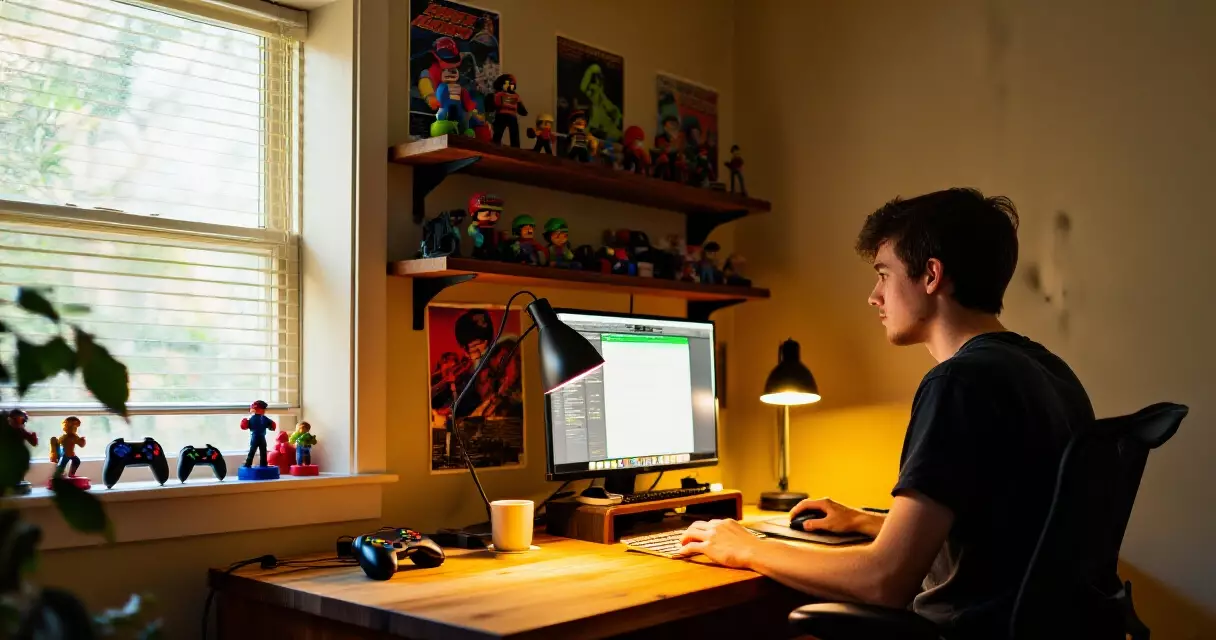
One of the most exciting stories in the gaming world today is the tale of the lone developer behind the retro indie game that became popular on Steam 2026 — an ordinary person, without a big studio, without a million-dollar budget, who created a game that captured the world. In the past, everyone thought you needed a big company to make a famous video game. But the stories of Luca Galante, Toby Fox, and Eric Barone prove that one person — alone — can change the history of gaming.
Why Did Retro Indie Games Become Popular on Steam?
For several years, Steam has been the largest digital game store in the world for PC gaming. Amidst the thousands of games released annually, one trend stands out: retro indie games — those with pixel art aesthetics, chiptune music, and simple gameplay — continue to capture the attention of players. It’s not just for sentimental reasons. Retro-style games are often easier and cheaper to make, making them perfect for a lone developer without a large team.
According to data from Indielist, there are 116 indie retro games with the Steam user tag “Retro” collectively holding 2,598,706 reviews, with an average 92% positive rating. This number proves that the retro aesthetic is not just nostalgia — it is a strong genre that players around the world, including Filipinos, are passionate about.
The Story of Eric Barone: Stardew Valley and the One Man Who Made It
There is no better example of the story of a lone developer behind a retro indie game that became popular on Steam than Eric Barone, also known as ConcernedApe. In 2012, a young college graduate in America began writing code for a farming simulation game alone — without a publisher, without a team, without a guarantee of success. For nearly four years, he designed everything by himself: the graphics, the music, the code, the story.
When Stardew Valley was released on Steam in 2016, it immediately became a global phenomenon. According to Wikipedia, on its tenth anniversary in February 2026, Stardew Valley sold over 50 million copies — a number surpassing the best-selling individual entries of franchises like Pokémon, The Legend of Zelda, and Call of Duty. One person. Four years of work. Fifty million copies.
“One person, four years of work, fifty million copies — Eric Barone’s story proves that passion and perseverance are the strongest weapons of a solo developer.”
What Was the Secret to Barone’s Success?
Many players and aspiring developers ask: what drove Barone? First, his game was deeply inspired by retro games — particularly from the Harvest Moon series, which he witnessed in his youth. Second, he stayed true to his vision: he did not succumb to the pressure to make the game look more “modern.” That very thing — the retro pixel art aesthetic and simple gameplay loop — became its strength. Third, he continued extensive support and free updates after release, strengthening community loyalty.
Lessons for Aspiring Filipino Developers
For Filipinos who want to follow Barone’s path, there are several important lessons. You don’t need a big company — you need discipline and dedication. You don’t need cutting-edge graphics — you need a deep understanding of what is fun for the player. And above all, a game made with love will connect with players in a different way than a game made solely for profit.
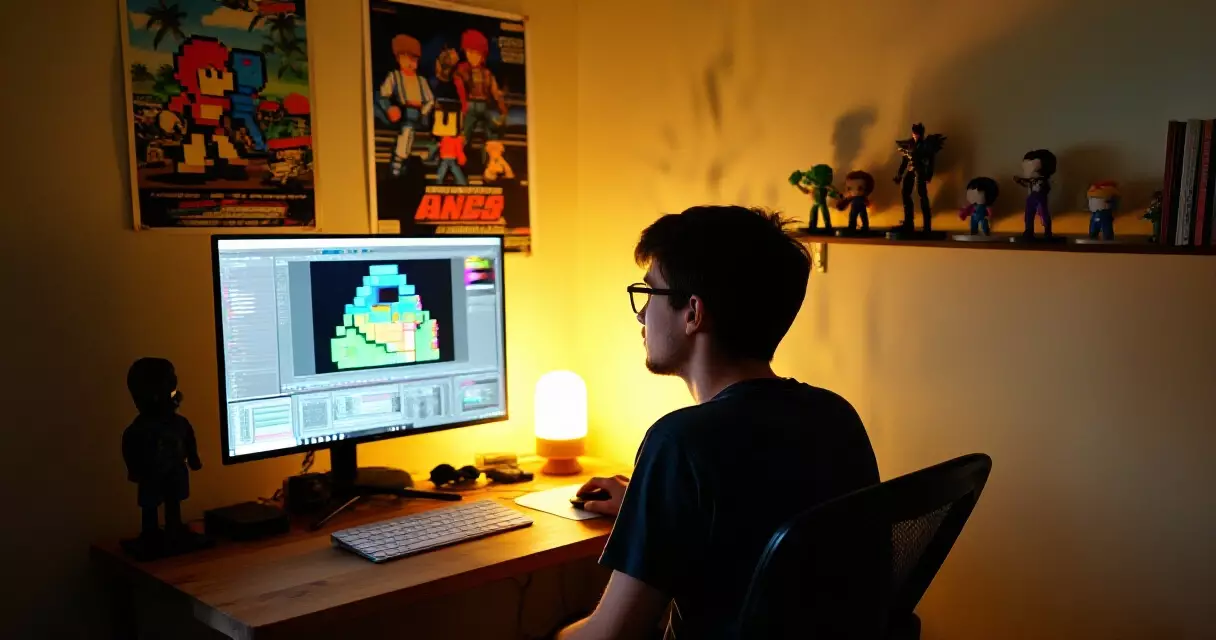
Toby Fox and Undertale: From RPG Maker to Gaming History
If Eric Barone is the symbol of the farming game revolution, Toby Fox is the symbol of the retro RPG that raised industry expectations. According to Wikipedia, Undertale was developed by Toby Fox over 32 months, primarily using the RPG Maker engine, and released in September 2015. It was funded through a Kickstarter crowdfunding campaign — meaning ordinary people trusted and supported him before the world even knew what kind of game he was making.
The result? A game with a retro look but revolutionary mechanics, particularly the choice-driven approach to battling enemies. Within months of its release, it sold over 530,000 copies on Steam. According to Games Learning Society, estimates for Undertale‘s total sales across all platforms are around 7 to 8 million copies — an impressive success for a game made by just one person.
The Captivating Story of the Lone Developer Behind the Retro Indie Game That Became Popular on Steam: Luca Galante and Vampire Survivors
If there is one story of a lone developer behind a retro indie game that became popular on Steam with the strongest impact on the industry in recent years, it is the story of Luca Galante and his game Vampire Survivors. According to Wikipedia, Galante started developing Vampire Survivors in 2020 while unemployed — an Italian programmer playing and working on a small project for himself and his friends.
Initially, the game went almost unnoticed on Steam — averaging only four players in its first month. But after being featured by YouTube content creator SplatterCatGaming, its popularity suddenly exploded. According to The Guardian, Vampire Survivors reached 6 million Steam sales and 3 million mobile downloads by August 2023. By 2026, according to The Game Business, over 27 million players had played it across all platforms.
The game features a retro arcade aesthetic and combines classic bullet-hell and roguelite genres, selling for just $2.99 on Steam — a price accessible even for players in the Philippines. During the time of major roster changes in the Philippine esports scene, indie games like Vampire Survivors continued to top the Steam charts, showcasing the diverse gaming experiences players seek.
History of Solo Indie Game Development: From Pixelated Passion to Global Hit
The culture of solo game development is not new. In the 1980s and 1990s, many iconic games were made by a single programmer or a very small team. But with the advent of modern game engines like Unity, Godot, and RPG Maker — as well as digital distribution platforms like Steam — it has become easier and cheaper for a solo developer to enter the industry. These tools have empowered individuals with capabilities once exclusive to large studios.
Among the most historic examples of solo indie development is Celeste — a platformer created by Maddy Thorson and Noel Berry that grew from a game jam prototype. Although not literally a solo developer, their story reflects the same ethos: small team, retro aesthetic, and strong artistic vision. The game won a BAFTA and numerous Game of the Year awards, praised by critics as one of the best platformers of the generation.
How Does a Developer Make a Retro Indie Game Alone?
The process of making a retro indie game alone is not simple, but there is a pattern seen in the stories of those who succeeded. Here are the main steps typically taken by solo developers:
- Choosing the right tool: Most successful solo developers use accessible game engines like Unity, Godot, RPG Maker, or GameMaker Studio — platforms with extensive free resources and tutorials.
- Start small: Galante’s Vampire Survivors began as a simple prototype for his own enjoyment. The key is starting with an achievable scope before expanding.
- Pixel art as a practical choice: Besides the nostalgic appeal, pixel art is faster and cheaper to create than 3D graphics — a practical decision for a solo developer with limited time and budget.
- Community building before launch: Many successful solo developers build a community on Reddit, Discord, and social media while still developing the game, to have a built-in audience at launch time.
- Chiptune and original soundtrack: Original music is a strong differentiator — Toby Fox, for example, wrote all the music for Undertale alone, and the soundtrack became one of the game’s most recognizable parts.
Comparing the Most Iconic Solo-Developed Retro Indie Games on Steam
To better understand the scale of success of retro indie games made by a single developer, here is a comparison of the most popular titles:
| Game | Developer | Release Year | Total Sales / Players | Retro Aesthetic |
|---|---|---|---|---|
| Stardew Valley | Eric Barone (ConcernedApe) | 2016 | 50 million+ copies (Feb. 2026) | Pixel art farming sim |
| Undertale | Toby Fox | 2015 | 7–8 million+ copies (estimate) | Retro RPG, chiptune OST |
| Vampire Survivors | Luca Galante (poncle) | 2021 | 27 million+ players (2026) | Retro arcade roguelite |
| Deltarune | Toby Fox | 2018-present | 100,000+ concurrent players at launch | Retro RPG sequel |
Sources: Wikipedia (Eric Barone), Wikipedia (Undertale), Wikipedia (Vampire Survivors), Wikipedia (Deltarune)
The Role of Steam in the Success of Solo Indie Developers
One cannot discuss the story of the lone developer behind the retro indie game that became popular on Steam without addressing the role of the platform itself. Steam, owned by Valve Corporation, has become the most accessible path for indie developers to distribute their games to the global market. The Steam Direct program allows any developer to release a game on Steam by paying a small fee — a significant change from the past when developers had to go through lengthy processes.
For Filipino players, Steam has also opened access to indie games that were once hard to obtain. In the context of indie game reviews like REPLACED that have become a topic of discussion in the local gaming community, it is clear that Filipinos actively support the indie game scene, not only as players but as potential developers as well.
“Steam is not just a store — it is a global stage where a solo developer from any corner of the world can reach millions of players.”
Challenges Faced by Lone Developers
Despite the bright success stories, the challenges faced by every solo developer should not be overlooked. The reality is that a large portion of independent games on Steam do not reach this level of success. According to various studies in the gaming industry, the visibility problem — the difficulty of being noticed on a platform with thousands of new games each year — is one of the biggest obstacles for indie developers.
In addition, solo developers often have to perform all roles: programmer, artist, composer, marketer, and customer support. Burnout is a real danger, and many promising projects are abandoned before completion. But the stories of Barone and Galante — both of whom experienced periods of doubt before success — remind us that perseverance is often the key to unseen success.
| Challenge | Explanation | Possible Solution |
|---|---|---|
| Visibility on Steam | Thousands of new games each year | Early Access, demo at Steam Next Fest, social media |
| Developer Burnout | All work falls on one person | Realistic scope, regular breaks, community support |
| Marketing and PR | No dedicated marketing team | YouTube/Twitch outreach, indie game press contacts |
| Budget and Time | Need to earn while developing | Part-time development, crowdfunding (Kickstarter) |
Frequently Asked Questions (FAQ)
Can one person really make a popular game?
Yes, and there is plenty of evidence for this. Eric Barone (Stardew Valley), Toby Fox (Undertale), and Luca Galante (Vampire Survivors) are all lone developers who made games that became global hits. The key is choosing the right scope for the project and using accessible tools like Unity, RPG Maker, or Godot engine.
Why do indie games often have a retro aesthetic?
There are two reasons: practical and artistic. Practically, pixel art is faster and cheaper to create than 3D graphics, perfect for a developer with limited budget and time. Artistically, many developers grew up with retro games and want to recreate that feeling — and many players respond positively to this nostalgia.
How much can an indie game earn on Steam?
Earnings vary greatly depending on the game’s success. Most indie games on Steam earn only a little, while a lucky few make millions. For example, according to data gathered from the Reddit community, the total gross revenue of Stardew Valley on Steam has exceeded $518 million. But this is an exceptional case — for the average indie developer, the goal is to earn enough to continue making more games.
How do players discover indie games on Steam?
The most common way of discovery for indie games is through YouTube and Twitch content creators. For example, the explosion of Vampire Survivors began when it was featured by YouTuber SplatterCatGaming. Additionally, Steam Next Fest (where developers can release free demos) and word-of-mouth in Reddit and Discord communities are strong discovery channels.
Can a Filipino make an indie game for Steam?
Yes, there are no barriers for Filipino developers to release on Steam. All you need is a Steam Direct account and the fee for Steam Direct ($100 refundable fee). Many free and affordable game engines are available online. What is required is dedication, creative vision, and patience in the development process. Within the rapidly growing indie game scene in the Philippines, there are already some Filipino developers beginning to explore this path.
What is the difference between a retro indie game and a modern AAA game?
AAA games are made by large studios with hundreds of employees and budgets that can reach hundreds of millions of dollars. Retro indie games are typically made by one to ten people, have simpler aesthetics and gameplay, and sell at lower prices. But “smaller” does not mean lower quality — often, indie games are deeper in terms of emotional impact and creative risk-taking because they do not have to adhere to corporate expectations.