
Summary
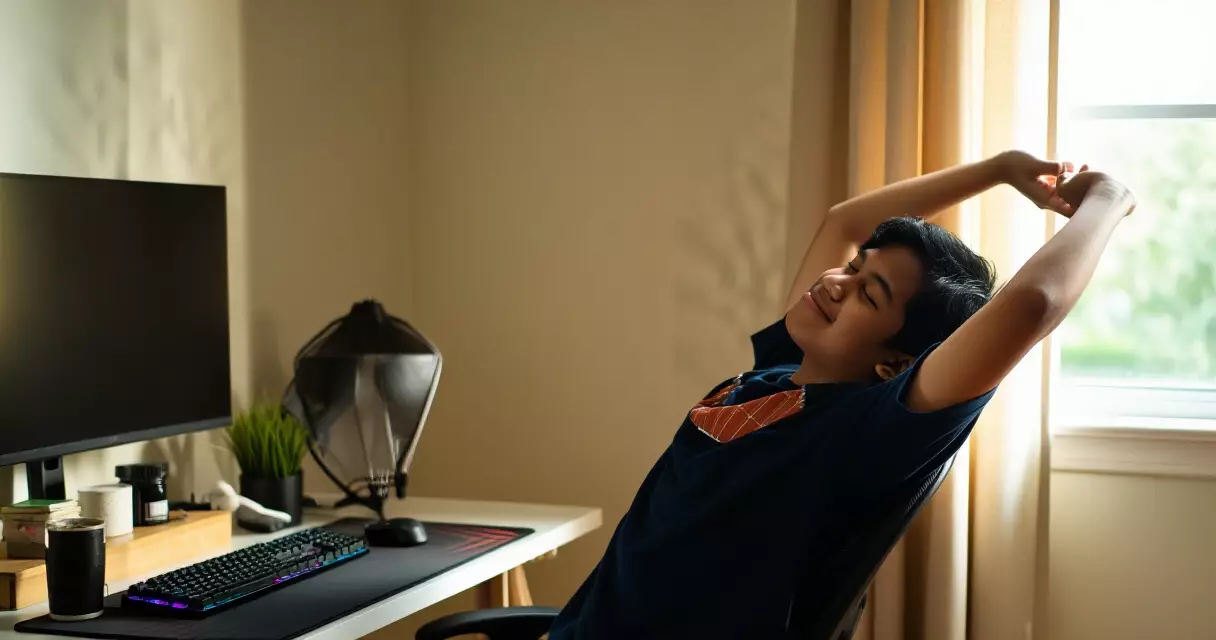
✓Reviewed by Emma Thompson How to start healthy gaming habits for beginner gamers is one of the most important questions anyone new to the world of gaming should answer. According to a peer-reviewed study published on PubMed, there are already...
Table of contents
- 1 Why Are Healthy Gaming Habits Important for Beginners?
- 2 Understanding Gaming Disorder Before You Start
- 2.1 The Difference Between Healthy Gaming and Problematic Gaming
- 3 How to Start Healthy Gaming Habits: Setting the Right Time to Play
- 3.1 Practical Gaming Schedule for Beginners
- 4 The Connection Between Gaming and Sleep: Why You Should Protect Your Rest
- 4.1 Ways to Protect Sleep as a Beginner Gamer
- 5 Physical Health: How to Play Without Hurting Your Body
- 6 Mental Health and Gaming: Avoiding Problematic Gaming Habits
- 7 How to Start a Healthy Gaming Routine: Step by Step
- 8 Healthy Gaming Tips for Student Beginner Gamers
- 9 How to Know If Your Gaming Habits Are Still Healthy
- 10 Frequently Asked Questions (FAQ)
- 10.1 How long should a beginner gamer play each day?
- 10.2 Is it okay to play every day as long as it is controlled?
- 10.3 What are the signs that gaming habits are becoming harmful?
- 10.4 Should you game before going to sleep?
- 10.5 How do I know if my relationship with gaming is healthy?
- 10.6 Can gaming still be enjoyable even with a time limit?
- 11 Summary: Key Takeaways for Healthy Gaming Habits
How to start healthy gaming habits for beginner gamers is one of the most important questions anyone new to the world of gaming should answer. According to a peer-reviewed study published on PubMed, there are already 29.9 million gamers in the Philippines — and that number continues to grow. With such a massive gaming community, it is more important than ever to learn how to play responsibly from the very start.
Why Are Healthy Gaming Habits Important for Beginners?
Many beginner gamers start without any structure — playing until the early hours of the morning, skipping meals, and neglecting school or work. This is the most common mistake. The fact that the World Health Organization recognized gaming disorder in ICD-11 shows that this issue is serious — but the diagnosis is not based on the number of hours played, rather on loss of control, prioritizing gaming over other important activities, and continuing despite negative consequences.
For beginners, the good news is: it is much easier to build healthy habits from the start than to break bad ones after months or years. Healthy gaming habits for beginners are not about restriction, but about smartly integrating gaming into a balanced life.
Understanding Gaming Disorder Before You Start
Before anything else, it is important for a beginner to understand what gaming disorder actually is — and what it is not. According to the American Psychiatric Association, a diagnosis of internet gaming disorder requires five or more symptoms within one year: preoccupation with gaming, withdrawal symptoms when unable to play, increasing time spent gaming to feel satisfied, and continuing despite knowing the negative effects.
Playing games every day, in and of itself, is not immediately a disorder. The key is whether gaming is already affecting school performance, work, relationships, or health. For beginners, the goal is to establish a gaming routine that never reaches that point.
The Difference Between Healthy Gaming and Problematic Gaming
| Healthy Gaming | Problematic Gaming |
|---|---|
| Has a set gaming time | Plays non-stop no matter how long |
| Goes to sleep at a reasonable hour | Negatively impacts sleep and rest |
| Still fulfills responsibilities | Neglects school, work, or family |
| Can step away from gaming when needed | Anxiety or anger when unable to play |
| Gaming as relaxation or enjoyment | Gaming as a way to escape problems |
How to Start Healthy Gaming Habits: Setting the Right Time to Play
The first and most practical step to starting healthy gaming habits is to set a time limit. According to the recommendation of the Centers for Disease Control and Prevention (CDC) for youth ages 6–18, recreational screen time should be 2 hours or less per day. For adult beginners, there is no official number recommended, but the principle is the same: gaming should not displace physical activity, sleep, or primary responsibilities.
Practical Gaming Schedule for Beginners
- Weekdays: 1 to 1.5 hours, after school or work and before 9 PM
- Weekends: 2 to 3 hours, with a break every 45–60 minutes
- Gaming curfew: Stop all gaming at least 1 hour before bed
- Use in-game timers: Mobile Legends, Valorant, and MLBB have built-in session reminders — turn them on
The Connection Between Gaming and Sleep: Why You Should Protect Your Rest
For a beginner gamer, taking care of your sleep is one of the most effective healthy gaming habits you can adopt. In a broad review of more than fifty studies published in PubMed Central (Hale et al., 2018), it was found that nighttime screen media use is associated with later bedtimes, shorter total sleep duration, and poorer quality of rest.
Additionally, according to a 2025 study published by the CDC, high screen time is directly linked to later bedtimes, insufficient sleep duration, reduced sleep efficiency, insomnia symptoms, and excessive daytime sleepiness. For Filipino students and working beginner gamers, these are serious consequences that can affect performance in class or at the office.
A gamer who sleeps well will play better than one who games all night — because the brain is sharper, faster, and more analytical after adequate rest.
Ways to Protect Sleep as a Beginner Gamer
- Set a gaming curfew: avoid gaming 1–2 hours before your target bedtime
- Keep your PC, console, or phone charger out of the bedroom if possible
- Use a blue light filter at night (available on most smartphones and monitors)
- Set your phone to Do Not Disturb mode while sleeping so teammates cannot ping you
Physical Health: How to Play Without Hurting Your Body
How to start healthy gaming habits for beginner gamers is not just about mind and time — physical health must be taken care of as well. Many beginners do not notice that sitting for long periods without breaks causes back pain, neck stiffness, and eye strain.
- 20-20-20 Rule for your eyes: Every 20 minutes, look at something 20 feet away for 20 seconds to give your eyes a rest
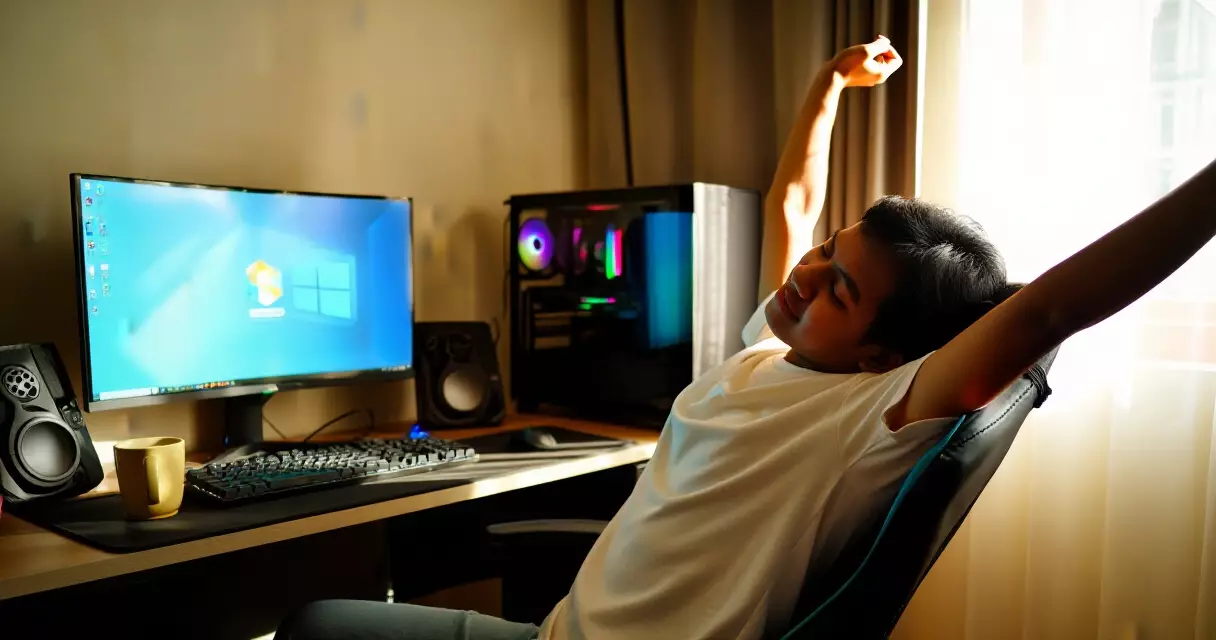
- Stand and stretch every 45–60 minutes: Prolonged sitting affects blood flow; a simple walk around the room or arm stretch makes a big difference
- Proper posture: Your monitor should be at eye level, your arms should have support, and your feet should be flat on the floor
- Drink water: Gaming can make you forget to eat or drink; keep a glass of water beside your setup
Mental Health and Gaming: Avoiding Problematic Gaming Habits
According to a 2026 study published in the Journal of Medical Internet Research (Deng et al., 2026), both excessive leisure screen time of more than 2 hours per day and internet gaming disorder are independently associated with higher odds of mental health problems — including psychological distress, depression, paranoia, insomnia, and suicidal ideation. This data is not meant to scare beginners, but to give them a clear basis for the limits they should set.
For those looking for a more comprehensive foundation for understanding Filipino gaming culture, our article on the Top 5 Most Downloaded Mobile Games in the Philippines (2026) provides context on which games are most popular in our country — and which ones require careful time management.
How to Start a Healthy Gaming Routine: Step by Step
Here is a practical guide for beginners who want to build their healthy gaming routine from the very start:
- Set your gaming window: Choose a specific time of day for gaming — for example, 7–9 PM after work or school.
- Use a timer: Apps like your phone’s built-in timer, or the in-game session timer in games like Mobile Legends: Bang Bang, help you monitor your time.
- Finish your responsibilities first: Do not game until homework, work tasks, or primary household duties are done.
- Exercise every day: Per CDC recommendations for youth, aim for 60 minutes of physical activity daily — whether a simple walk, basketball, or stretching.
- Talk to family or friends: Let your loved ones know your gaming schedule to avoid conflict and to keep yourself accountable.
- Keep your gaming space clean: A tidy and comfortable gaming setup reduces unnecessary stress and helps support healthier sessions.
Healthy Gaming Tips for Student Beginner Gamers
For students who are new to gaming, the core principle is simple: gaming is a reward, not a default activity. Those who struggle most with healthy gaming are those who use it as an escape from academic stress — which paradoxically leads to even more stress in the long run as responsibilities pile up.
| Time of Day | Recommended Activity | Gaming? |
|---|---|---|
| 6–8 AM | Eating, getting ready, preparing for school | No |
| 8 AM–3 PM | Class / Work | No |
| 3–5 PM | Rest, snack, studying | Possible (max 30 min) |
| 5–7 PM | Homework / household chores | No |
| 7–9 PM | Gaming window | Yes (max 1.5–2 hours) |
| 9 PM onward | Wind down, no screens | No |
For those who want to become more competitive in games like Mobile Legends: Bang Bang, it is important to know that a clear mind — which comes from adequate sleep and rest — is a greater advantage than any tip or build guide. Our comprehensive MLBB Meta 2026 article explains why win rates shift — and understanding it requires a sharp mind.
You will not become a better gamer by sleeping less — the truth is exactly the opposite.
How to Know If Your Gaming Habits Are Still Healthy
Self-assessment is important for every beginner gamer. The WHO, through ICD-11, has provided clear guidance: gaming only becomes a problem when there is functional impairment — when gaming is already affecting work, school, relationships, or health. Here are some questions you can ask yourself every month:
- Am I getting enough sleep (7–9 hours for adults, 8–10 for youth)?
- Am I fulfilling all of my responsibilities?
- Is my family or friends not struggling because of my gaming?
- Can I stop gaming when I need to?
- Is my mood not being negatively affected when I miss a gaming session?
If all your answers are positive, you are on the right track. If one or two answers are “no,” it is time to reconsider your gaming schedule. For those interested in getting serious about esports and competitive gaming, our guide on How to Join an Esports Tournament for Beginners 2026 has a detailed roadmap that starts with healthy habits.
Frequently Asked Questions (FAQ)
How long should a beginner gamer play each day?
Based on the CDC recommendation for recreational screen time, 2 hours or less per day is the practical benchmark for youth ages 6–18. For adult beginners, there is no official limit, but the principle is the same: gaming should not displace sleep, exercise, work, or relationships. 1–2 hours per day is a good starting point for any beginner.
Is it okay to play every day as long as it is controlled?
Yes, according to the World Health Organization. Gaming disorder is not based on the frequency of play but on the loss of control and the impact on daily life. Daily gaming with a set time limit that does not affect sleep or responsibilities is considered normal behavior.
What are the signs that gaming habits are becoming harmful?
According to the American Psychiatric Association, the main warning signs are: inability to stop gaming even when wanting to, feelings of withdrawal when unable to play, increasing gaming time to feel satisfied, lying about how much time is spent gaming, and losing interest in other activities. If three or more of these are experienced, it is recommended to consult a professional.
Should you game before going to sleep?
It is not recommended. Based on research from Pennsylvania State University, interactive screen use — including gaming — delays sleep by approximately 9–10 minutes for every hour of play. The best practice is to stop gaming at least 1 hour before your target bedtime, and establish a relaxing pre-sleep routine such as reading or listening to music.
How do I know if my relationship with gaming is healthy?
The simplest test: can you stop gaming when something more important needs to be done, without intense anger or anxiety? If yes, your relationship with gaming is likely healthy. If stopping causes significant discomfort, frustration, or mood changes, this is a sign that a closer look is needed.
Can gaming still be enjoyable even with a time limit?
Yes, and this is one of the most interesting truths about healthy gaming: gamers who have clear schedules and breaks often enjoy the experience more deeply than those who play non-stop. Satisfaction does not come from the quantity of hours but from the quality of each session — a clear mind, good mood, and healthy body produce a better gaming experience.
Summary: Key Takeaways for Healthy Gaming Habits
How to start healthy gaming habits for beginner gamers begins with three simple principles: set a time limit, protect your sleep, and finish your responsibilities first. For beginners, the next step is to choose your gaming window today and let your family or friends know about it. Gaming is a great hobby and can be part of a balanced, healthy life — the key is to start it the right way.
- Set a gaming window and gaming curfew before you start
- Protect your sleep: avoid gaming 1–2 hours before bed
- Use the 20-20-20 rule to protect your eyes
- Finish your responsibilities before gaming