Summary
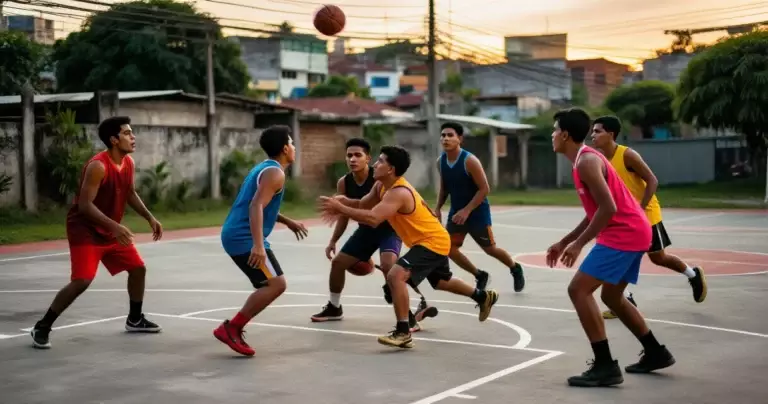
In the era of mobile gaming and esports, it's easy to forget that the Philippines has its own rich tradition of games. According to Wikipedia, there are approximately 40 well-known traditional games in the country, but only a few are...
Table of contents
- 1 What does “game examples” mean?
- 2 A brief history of traditional games in the Philippines
- 3 Game examples: from traditional to modern
- 4 8 classic “laro ng lahi” examples to try
- 4.1 Patintero
- 4.2 Tumbang Preso
- 4.3 Piko
- 5 Comparison of traditional games
- 6 Game examples for the modern digital generation
- 7 Why these games are important for child development
- 8 How to choose the right game for your occasion
- 9 Experts and organizations preserving “laro ng lahi”
- 10 Frequently Asked Questions About Game Examples
- 10.1 What is the most popular “laro ng lahi” example?
- 10.2 How many traditional games are there in the Philippines?
- 10.3 What equipment is needed for Tumbang Preso?
- 10.4 How many players are there in Patintero?
- 10.5 Can traditional and modern games be mixed?
- 10.6 Where did Kadang-kadang originate?
- 11 Summary: Key Points
- 12 References
In the era of mobile gaming and esports, it’s easy to forget that the Philippines has its own rich tradition of games. According to Wikipedia, there are approximately 40 well-known traditional games in the country, but only a few are still recognized by the new generation. If you’re looking for game examples to play in 2026, from the classic Patintero to the latest mobile titles, here’s the complete guide.
What does “game examples” mean?
When searching for the term game examples, a person is usually looking for a list of real examples of games to try, guide, or teach. This can refer to two major categories: traditional Filipino games or “laro ng lahi,” and modern digital games popular among today’s youth. In this guide, we will cover both to give you a complete picture.
Traditional games often have simple mechanics and use only household items like slippers, cans, stones, and garters. According to research by Twinkl Philippines, some of the most popular examples include Tumbang Preso, Agawan Base, Taguan, Piko, Sungka, Bahay-Bahayan, and Patintero.
A brief history of traditional games in the Philippines
Traditional Filipino games have been passed down from one generation to the next. According to Wikipedia, due to limited access to manufactured toys in the past, Filipino children created games that required almost nothing but the participation of players. As a result, these game examples became inexpensive, easy to set up, and creative.
Regional games also emerged. For example, Kadang-kadang, known as karang in Bisaya, is a game using bamboo stilts that originated in Cebu and was introduced as a team game under “Laro ng Lahi.” Documentation is also important: a group developed a time-based scoring system for some games like patintero, syatong, dama, lusalos, and holen butas, according to the same source.
Game examples: from traditional to modern
The good news for players in 2026 is that there is a wide range of choices. On one side, there are the classic “laro ng lahi” games that are being revived in schools and festivals. On the other side, digital games continue to grow, as seen in the most downloaded mobile games in the country.
You don’t have to choose just one. Many families and communities now mix the two: traditional games in the afternoon and digital games in the evening. The important thing is to know enough game examples to always have an activity ready for any occasion.
Every “laro ng lahi” is not just entertainment, but a lesson in strategy, coordination, and community.
8 classic “laro ng lahi” examples to try
Here are the most popular examples, all documented by Twinkl Philippines and other sources.
Patintero
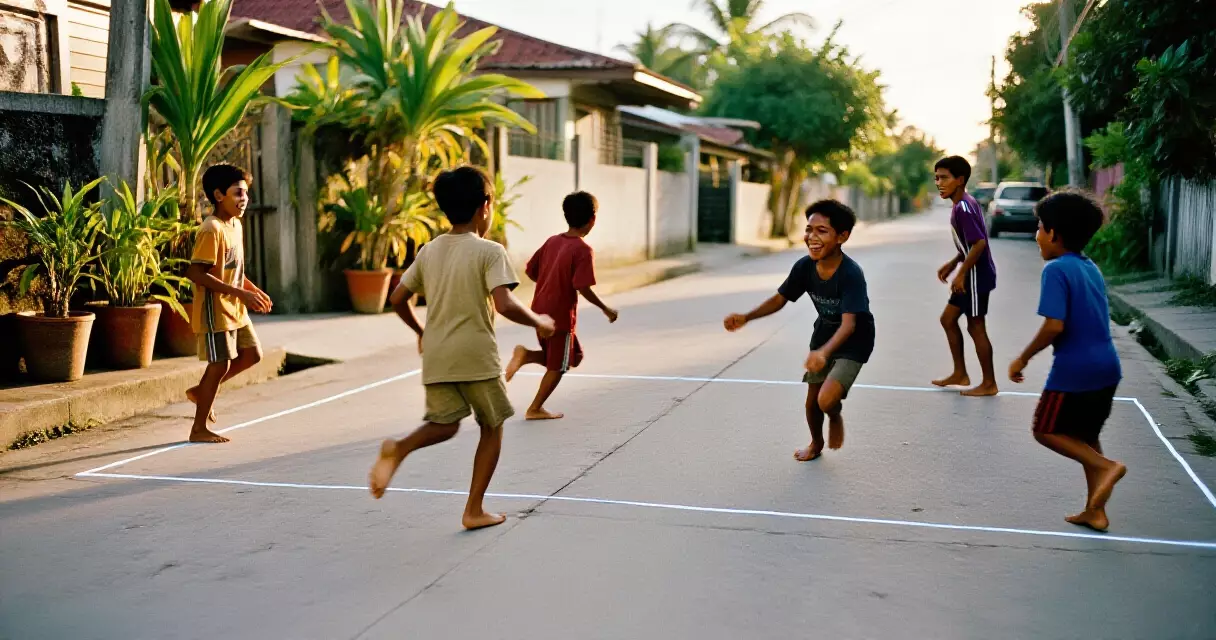
Considered one of the most popular of all Filipino games, Patintero requires teamwork and strategy. According to Volunteer for the Visayans, a team consists of five players. The goal of the attacking team is to cross the lines without being caught by the defenders.
Tumbang Preso
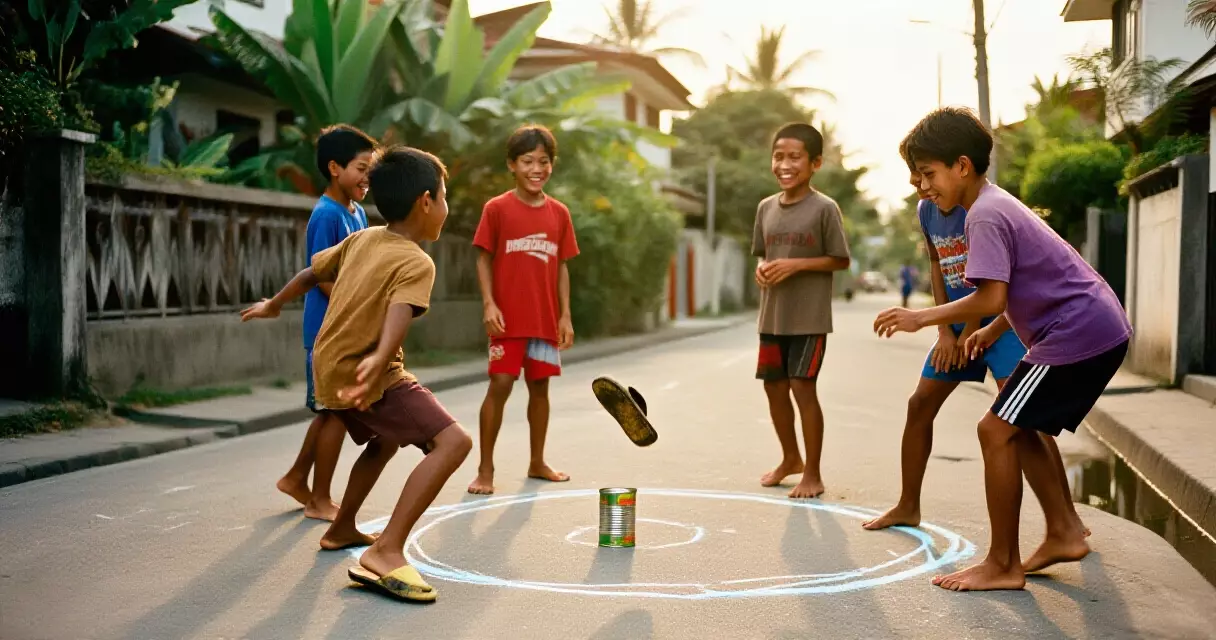
Also known as presohan in Luzon and tumba-lata or tumba-patis in Visayas, this game uses slippers as a tool to knock down a can. The simplicity of the equipment makes it one of the most accessible game examples for any barangay.
Piko
Similar to hopscotch, Piko is played on a grid drawn on the ground with numbers and divisions. Players jump without stepping on the lines while using a stone stick as a marker.
Comparison of traditional games
To make it easier to choose, here’s a table of some classic examples, their general number of players, main skills, and equipment.
| Game | Number of Players | Main Skills | Equipment |
|---|---|---|---|
| Patintero | 5 per team | Strategy and speed | No equipment, just lines |
| Tumbang Preso | 3 or more | Accurate aim | Can and slippers |
| Piko | 2 or more | Balance | Stone (marker) |
| Chinese Garter | 3 or more | Knee strength, jumping | Long garter |
| Sungka | 2 | Strategy, counting | Sungkaan and shells |
| Luksong Baka | 3 or more | Agility, coordination | No equipment |
Game examples for the modern digital generation
It’s not just traditional games that come to mind for today’s players. For those looking for digital game examples, some of the most popular titles in the Philippines in 2026 include Mobile Legends: Bang Bang, Honor of Kings, and other MOBA and battle royale games. You can track the ongoing changes in the MLBB meta 2026 to stay competitive.
| Feature | Traditional Game | Modern Game |
|---|---|---|
| Location | Outdoors, street, yard | Online, mobile, PC |
| Equipment | Can, garter, stone, slippers | Smartphone or computer |
| Example | Patintero, Tumbang Preso, Sungka | Mobile Legends, Honor of Kings |
| Physical movement | High | Low |
| Cost | Almost free | Internet or device |
With every slipper thrown in Tumbang Preso, a tradition older than any console comes to life.
Why these games are important for child development
Beyond entertainment, traditional games have a real contribution to the physical and cognitive development of Filipino children and are recognized as an important part of the national cultural heritage, according to Wikipedia. Here are some benefits:
- Promotes physical activity and develops coordination and balance.
- Teaches strategy, counting, and thinking, especially in Sungka and Patintero.
- Strengthens community and teamwork.
- Low cost as it only uses surrounding items.
How to choose the right game for your occasion
The right game example depends on the number of players, age, space, and purpose. For large outdoor groups, Patintero or Agawan Base is ideal. For small groups, Sungka or Piko is suitable. For occasions like conventions or community events, interest in both traditional and digital games is growing, as seen in gatherings described in the Good Game Con 2026 guide.
- Determine the number and age of players.
- Assess the available space, whether outdoors or indoors.
- Ensure safe equipment, especially for games involving throwing or jumping.
- Decide if you want a physical game or a digital experience.
Experts and organizations preserving “laro ng lahi”
Many individuals and groups actively care for the tradition. Judith Mariano, author of “Laro ng Lahi: Restoring Pinoy’s Treasure and Legacy,” features classic Filipino street games. Volunteer for the Visayans actively teaches games in communities, noting that only six games are often taught despite approximately 40 existing. The local gaming culture continues to grow at events like Geek+Pop PICCS and Resbak 2026.
Frequently Asked Questions About Game Examples
What is the most popular “laro ng lahi” example?
Among the most popular are Patintero, Tumbang Preso, and Piko. Many sources consider Patintero as one of the most popular due to its teamwork and strategy requirements.
How many traditional games are there in the Philippines?
According to Wikipedia, there are approximately 40 known traditional games in the Philippines. However, according to Volunteer for the Visayans, only six are commonly taught in programs.
What equipment is needed for Tumbang Preso?
The requirements are simple: a can and a sturdy slipper to use as a tool. This is one of the reasons why this game is so easy to set up anywhere.
How many players are there in Patintero?
According to Volunteer for the Visayans, a team consists of five players. There is an attacking and a defending team in each game.
Can traditional and modern games be mixed?
Yes. Many families now alternate between physical games like Patintero and digital games like Mobile Legends. This provides a balance between movement and entertainment.
Where did Kadang-kadang originate?
According to Wikipedia, Kadang-kadang or karang in Bisaya, a bamboo stilts game, originated in Cebu and was introduced as a team game under “Laro ng Lahi.”
Summary: Key Points
- There are approximately 40 traditional games in the Philippines, according to Wikipedia.
- Among the most popular game examples are Patintero, Tumbang Preso, and Piko.
- Simple equipment: can, slippers, garter, and stone.
- The integration of traditional and modern digital games continues in 2026.
- These games have real benefits for physical and cognitive development.
In the end, the most important thing is to play and pass them on. With so many game examples available, there’s no reason not to play in 2026, whether locally or online.
References
- Traditional games in the Philippines, Wikipedia — accessed on June 24, 2026
- Traditional Filipino Games (Laro ng Lahi), Volunteer for the Visayans — accessed on June 24, 2026
- Laro ng Lahi Wiki, Twinkl Philippines — accessed on June 24, 2026