Summary
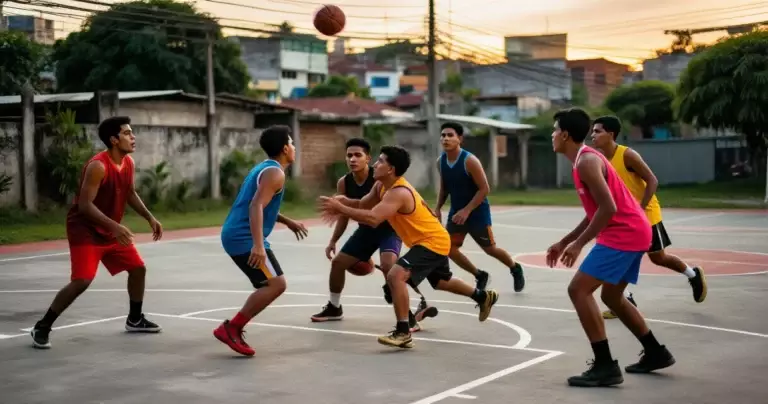
When you hear 90s games, memories of the hot streets in the afternoon, the laughter of neighbors, and games that don't require batteries or the internet immediately come to mind. Here's a surprising detail: according to data from Arnis in...
Table of contents
- 1 What Does 90s Games Mean?
- 2 History: From Traditional Games to the 90s
- 3 12 Most Popular 90s Games That Are Unforgettable
- 3.1 Street Games: Kings of the Afternoon
- 3.2 Toys and Handheld Gadgets
- 4 Number of Players in Traditional 90s Games
- 5 Why 90s Games Gradually Disappeared
- 6 The Revival of 90s Games in 2026
- 7 90s Games vs. Modern Gaming: What’s the Difference?
- 8 How to Bring Back 90s Games to the New Generation
- 9 Frequently Asked Questions About 90s Games
- 9.1 What are the most popular 90s games in the Philippines?
- 9.2 Why are some 90s games called traditional games?
- 9.3 What is the difference between 90s games and modern gaming?
- 9.4 Are 90s games still safe to play today?
- 9.5 How are 90s games being reintroduced in schools?
- 9.6 What are the popular 90s game gadgets?
- 10 References
When you hear 90s games, memories of the hot streets in the afternoon, the laughter of neighbors, and games that don’t require batteries or the internet immediately come to mind. Here’s a surprising detail: according to data from Arnis in the Philippines, sipa, one of the popular 90s games, was considered the national sport of the Philippines until 2009 before it was formally replaced by arnis. In this guide, we will discuss the meaning, history, examples, and the resurgence of 90s games on June 24, 2026.
What Does 90s Games Mean?
The term 90s games generally refers to games, toys, and the first generation of handheld gadgets that became popular among Filipino children in the 1990s. It encompasses three major categories: traditional street games like tumbang preso and patintero, physical toys like marbles and teks, and electronic gadgets like Brick Game and Game Boy. These were usually played outdoors, with many playmates, using simple equipment easily found around.
Unlike modern mobile gaming, 90s games relied on physical movement, face-to-face interaction, and creativity. This is why the sentimental value of 90s games remains strong among those now called 90s kids, who have their own families today.
History: From Traditional Games to the 90s
Many of the 90s games were not invented in the 1990s but were inherited from ancient traditional games played by Filipinos before the arrival of the Spaniards. According to research on traditional games in the Philippines, organizations like Samahang Makasining and the National Commission for Culture and the Arts popularized the term traditional games and developed a formal scoring system for patintero, syato, dama, and marbles.
The year 2009 is also significant in this history. Under Republic Act 9850 signed on December 11, 2009, arnis was officially declared the national martial art and sport, replacing sipa, which was previously considered the national sport. This shows how Filipino games continue to evolve from one generation to the next.
12 Most Popular 90s Games That Are Unforgettable
Here are twelve 90s games familiar to almost everyone who grew up in the 1990s. They combine street games, physical toys, and the first wave of handheld gadgets that entered the country.
| Game | Type | Short Description |
|---|---|---|
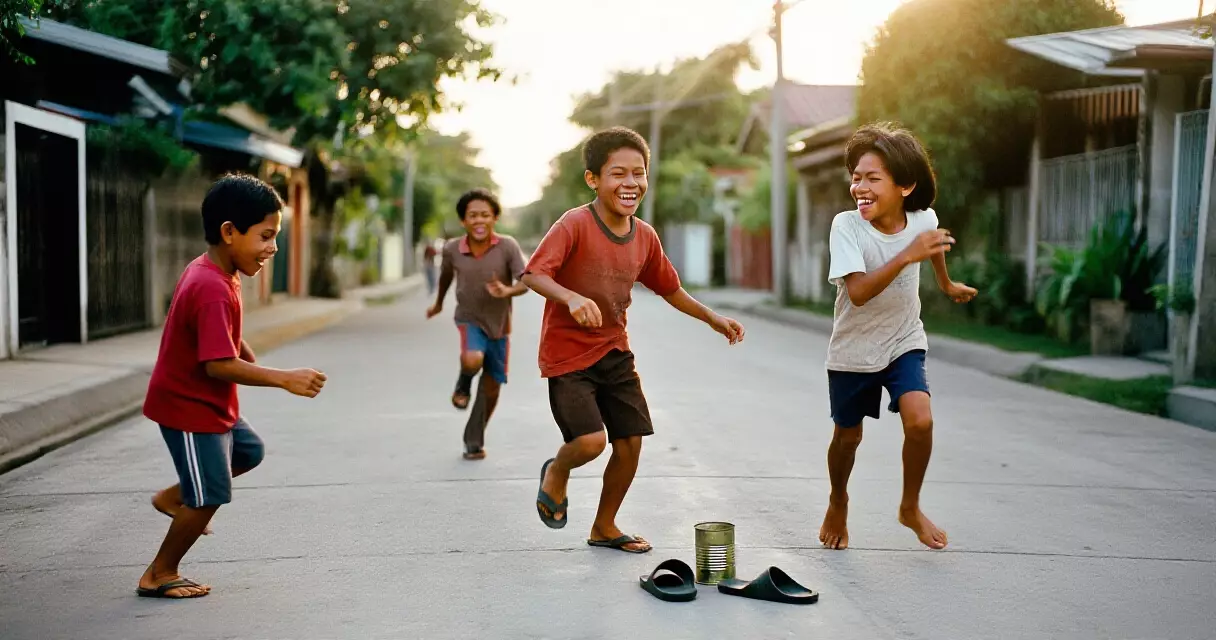
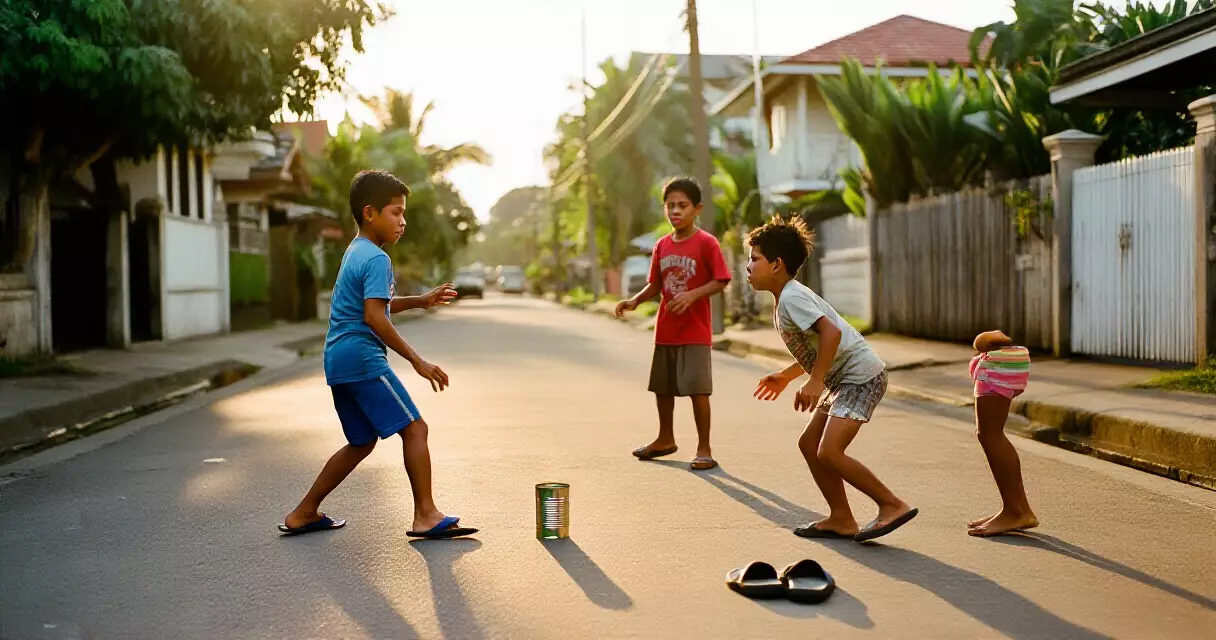
| Tumbang Preso | Street Game | Knocking down a can using a slipper or marker |
| Patintero | Street Game | Evading the guards on drawn lines |
| Piko | Street Game | Jumping on numbered boxes (hopscotch) |
| Luksong Tinik | Street Game | Jumping over thorns made of stacked hands |
| Sipa | Physical Game | Kicking an object made of a washer and thread |
| Marbles (Jolen) | Toy | Flicking a ball to knock down others |
| Teks | Toy | Card game using cards with pictures |
| Jackstone | Toy | Catching stones while bouncing a ball |
| Chinese Garter | Physical Game | Jumping over a stretched garter |
| Agawan Base | Street Game | Capturing the opponent’s base |
| Brick Game | Handheld Gadget | Classic handheld with Tetris-style game |
| Game Boy | Handheld Console | Portable video game console by Nintendo |
Street Games: Kings of the Afternoon
This is the heart of 90s games: games played on the streets, alleys, or vacant lots. These include:
- Tumbang preso, patintero, and agawan base for large groups
- Piko and Chinese garter, favorites of many
- Luksong tinik and luksong baka for the agile
- Hide and seek and langit-lupa at dusk
Toys and Handheld Gadgets
Aside from street games, handheld toys were also popular. Marbles, teks, jackstone, and yo-yo topped the list, along with the first gadgets like Brick Game and Game Boy. Notably, this culture of trading cards in the 90s is still alive today in local tournaments like the PH Master Ball League, proving that this kind of pastime never truly dies.
90s games are not just pastimes but schools of camaraderie, strategy, and courage that cannot be learned from any screen.
Number of Players in Traditional 90s Games
Part of the fun of 90s games is the number of playmates. Based on data from traditional games in the Philippines, here is the usual number of players and necessary equipment for some major games.
| Game | Number of Players | Main Equipment |
|---|---|---|
| Tumbang Preso | At least 3 | Can and slipper (marker) |
| Patintero | 2 teams, 5 each | Lines on the ground |
| Luksong Tinik | 2 teams | No special equipment |
| Sipa | 1 or more | Sipa (washer and thread) |
Why 90s Games Gradually Disappeared
There are many reasons why 90s games have weakened in the current generation. The main reasons include the proliferation of smartphones, faster internet, and children’s shift to indoor and online entertainment. Additionally, open spaces for hiding or running have also shrunk due to urbanization.
- The spread of mobile gaming and video streaming among children
- The shrinking of safe places to play in the city
- Changes in daily schedules and longer study hours
- Parents’ greater focus on safety over free outdoor play
This major change can be seen in the lineup of most downloaded mobile games today, where online and competitive games dominate over physical street games.
The Revival of 90s Games in 2026
On the other hand, the resurgence of 90s games is strong in 2026 due to nostalgia. Interest in retro gadgets like Brick Game and Game Boy is growing in online marketplaces, while local events and schools continue to promote street games as part of physical education and cultural heritage.
Street games are also emerging at conventions and gaming gatherings. In events like Good Game Con 2026, modern gaming and retro nostalgia are combined, opening the door for children to rediscover 90s games.
90s Games vs. Modern Gaming: What’s the Difference?
To better understand the value of 90s games, here is a comparison with modern gaming. Both have benefits, but they offer different experiences to children.
| Aspect | 90s Games | Modern Gaming |
|---|---|---|
| Location | Outdoors, streets | Indoor, screen-based |
| Equipment | Slippers, stones, garter | Smartphone, console, PC |
| Interaction | Face-to-face and physical | Online and virtual |
| Cost | Cheap or free | Higher (device and data) |
| Benefits | Physical movement, camaraderie | Convenience, global connection |
The two are not always at odds. Many modern games deliberately use retro design and the heart of 90s games, as seen in nostalgia-driven titles like Alabaster Dawn, which shows that the spirit of the past lives on in new technology.
The true value of 90s games is not in eliminating modern gaming, but in balancing: going out, playing, and socializing alongside modern entertainment.
How to Bring Back 90s Games to the New Generation
There’s no need to choose just one. Here are some practical ways to share 90s games with children growing up in the smartphone era:
- Set a weekly street game time in the yard or nearby park
- Teach simple games like piko and tumbang preso using household items
- Include street games in family reunions and community fiestas
- Support school and barangay programs that promote traditional games
- Combine old and new: retro gaming sessions with face-to-face games
Through this, not only nostalgia is passed on but also camaraderie, respect, and a healthy lifestyle brought by 90s games.
Frequently Asked Questions About 90s Games
What are the most popular 90s games in the Philippines?
Among the most popular are tumbang preso, patintero, piko, marbles, and teks. They are easy to play anywhere and do not require expensive equipment, making them the kings of entertainment across the country in the 90s.
Why are some 90s games called traditional games?
The term traditional games was popularized by Samahang Makasining and the National Commission for Culture and the Arts. It refers to ancient Filipino games inherited by the 90s, making them part of national culture and history.
What is the difference between 90s games and modern gaming?
90s games are typically physical, outdoor, and face-to-face, while modern gaming is screen-based and often online. They differ in equipment, cost, and type of interaction, but both provide joy and connection with others.
Are 90s games still safe to play today?
Yes, they are still safe to play with supervision and appropriate locations. It is important to choose a safe space, away from traffic, and ensure the game is age-appropriate to avoid accidents.
How are 90s games being reintroduced in schools?
Many schools incorporate street games into physical education and cultural programs. Government agencies also support this as part of preserving Filipino heritage.
What are the popular 90s game gadgets?
The most popular are the Brick Game and Nintendo’s Game Boy, along with other handheld and trading card games. They are now gaining popularity again as collector items and part of retro gaming nostalgia.
References
- Traditional games in the Philippines (Wikipedia) — accessed June 24, 2026
- Arnis in the Philippines (Wikipedia) — accessed June 24, 2026
- Republic Act No. 9850 (Supreme Court E-Library) — accessed June 24, 2026
- National Commission for Culture and the Arts (NCCA) — accessed June 24, 2026
- UNESCO 2003 Convention for the Safeguarding of the Intangible Cultural Heritage — accessed June 24, 2026