
Summary
In just a few years, milk tea has become a true national obsession in the Philippines, and among the flood of different flavors, one continues to remain at the top of the list for Filipinos: taro bubble tea. According to...
Table of contents
- 1 What is taro bubble tea?
- 1.1 Why is it purple?
- 2 A brief history of bubble tea and taro in the Philippines
- 3 How big is the taro bubble tea market in the Philippines?
- 3.1 Market data table
- 4 What makes the taste of taro bubble tea special?
- 5 Taro versus ube: what is the real difference?
- 6 How to choose a delicious taro bubble tea?
- 6.1 Consumer preference table
- 6.2 Practical checklist for choosing
- 7 Types and variants of taro bubble tea
- 8 Nutrition and health: what should you know?
- 9 Taro bubble tea in gaming and entertainment lifestyle
- 10 How to make your own taro bubble tea at home?
- 11 Frequently asked questions about taro bubble tea
- 11.1 Are taro and ube the same?
- 11.2 What is the usual price of taro bubble tea?
- 11.3 Is taro bubble tea healthy?
- 11.4 Where is taro bubble tea most popular in the Philippines?
- 12 Conclusion and key takeaways
- 13 References
In just a few years, milk tea has become a true national obsession in the Philippines, and among the flood of different flavors, one continues to remain at the top of the list for Filipinos: taro bubble tea. According to the latest market data from IMARC Group, the bubble tea market in the Philippines was valued at an estimated USD 13.6 million in 2025, and it is expected to rise to USD 26.8 million by 2034. On June 18, 2026, this comprehensive guide aims to delve deeply into why taro bubble tea has such a strong appeal, how to choose it correctly, and how it has become part of the daily life of many Filipinos, from students to gamers who want a treat while playing.
It’s not just a drink. Its purple or ube color, silky texture, and mild sweetness with a hint of nutty flavor have made it a cultural icon in tea shops across the archipelago. In this guide, we will combine authoritative market data, peer-reviewed studies on consumer preference, and practical experience to give you a clear picture of everything you need to know.
What is taro bubble tea?
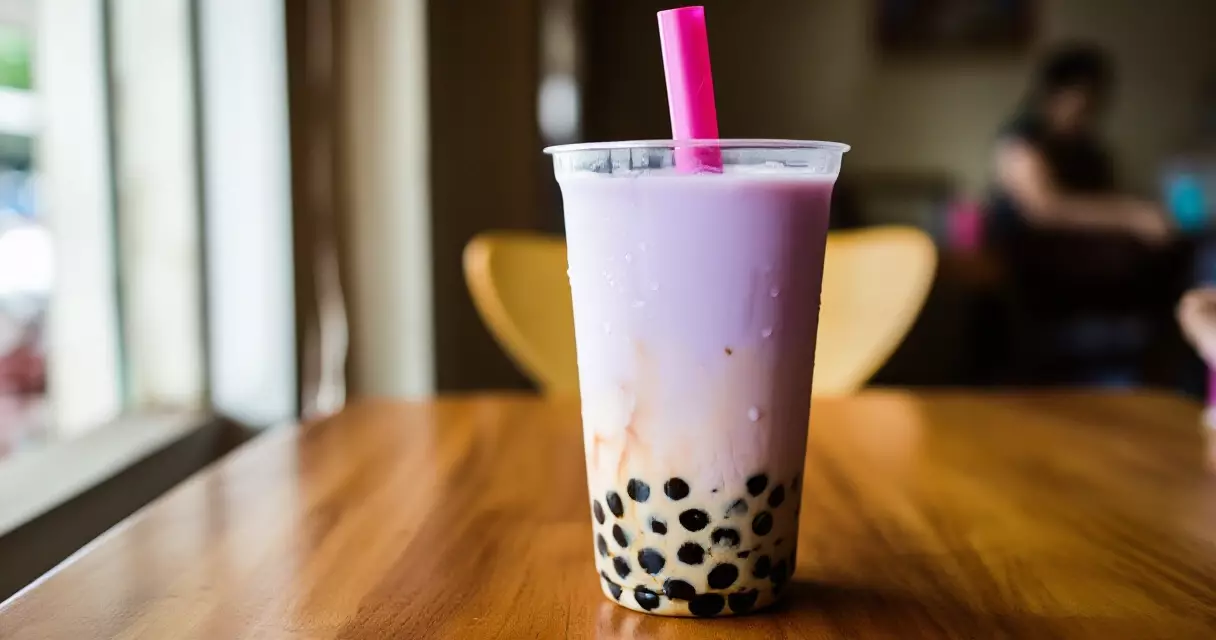
Taro bubble tea is a type of milk tea with a primary flavor of taro, a root crop that has long been part of Asian cuisine. It typically consists of a tea base, milk or creamer, taro powder or processed real taro, and the hallmark of bubble tea, the chewy tapioca pearls or sago at the bottom of the glass. The result is a thick, silky, and slightly sweet drink with a unique purple color.
According to market segmentation by DataHorizzon Research, taro is among the main flavor categories of the global bubble tea market, alongside original, matcha, brown sugar, coconut, mango, strawberry, and chocolate. This means it is not just a niche flavor but one of the pillars of the entire industry. In the context of the Philippines, the terms milk tea and bubble tea are often synonymous, and taro is one of the first flavors tried by newcomers due to its familiar and non-overwhelming taste.
Why is it purple?
Many people commonly believe that taro is naturally purple, but in reality, most taro used in cooking is white or pale cream-colored with purple flecks. The deep purple color we see in most commercial taro bubble tea often comes from taro powder with added color, or from mixing with ube. It’s important to know this because the taste of a drink made with real taro differs from one made with just powder. Premium stores use real processed taro for a more authentic and deeper flavor.
A brief history of bubble tea and taro in the Philippines
To understand the current popularity of taro bubble tea, we need to look back at where it originated. According to Wikipedia, bubble tea started in Taiwan in the 1980s, where two tea shops, one in Tainan and one in Taichung, both claim to have invented the drink. The debate lasted so long that it even reached a legal battle that lasted almost a decade before it ended, as the product was not patented.
In the Philippines, the real explosion of bubble tea’s popularity occurred in 2018. According to a peer-reviewed study published in PubMed Central, milk tea consumption in the region increased by approximately 3,500 percent in 2018, a figure that shows how quickly the tapioca pearl culture spread. Since then, taro has become one of the foundational flavors offered by almost all shops, from large international chains to small local businesses near schools.
This evolution is not just about taste but also about culture. Tea shops have become social spaces, places for friends to meet, study, or relax after a long day. In this way, taro bubble tea has become more than just a drink; it is a social experience deeply rooted in modern Filipino life.
How big is the taro bubble tea market in the Philippines?
The finances behind this drink are impressive. According to the IMARC Group report, the bubble tea market in the Philippines was USD 12.60 million in 2024 and grew to USD 13.6 million in 2025, with an estimated compound annual growth rate of 7.64 percent until 2034. The report attributes this growth to urbanization, a younger population, higher disposable income, and increasing demand for customizable drinks.
On a broader scale, MarkNtel Advisors included the entire tea shop market in the Philippines, estimated at USD 333 million in 2024 and expected to reach USD 540 million by 2030. According to the same report, nearly 48.29 percent of the Philippine population lives in urban areas, creating a significant demand for ready-to-drink beverages and gathering places. It’s also noteworthy that according to their data, approximately 150 new cold tea products with tapioca pearls were launched in 2023 alone, proving the intensity of competition and innovation.
Undeniably, a large part of this consumer base is young people and gamers. Many taro bubble tea buyers are students and young professionals who also order drinks while playing their favorite mobile games in the Philippines. The connection between casual gaming and milk tea consumption is a trend that continues to grow in the local market.
Market data table
| Metric | Value | Source |
|---|---|---|
| Bubble tea market PH (2024) | USD 12.60 million | IMARC Group |
| Bubble tea market PH (2025) | USD 13.6 million | IMARC Group |
| Expected value (2034) | USD 26.8 million | IMARC Group |
| CAGR (2025 to 2034) | 7.64 percent | IMARC Group |
| Tea shop market PH (2024) | USD 333 million | MarkNtel Advisors |
| Expected tea shop market (2030) | USD 540 million | MarkNtel Advisors |
| Population living in urban areas | 48.29 percent | MarkNtel Advisors |
What makes the taste of taro bubble tea special?
The secret to taro’s popularity lies in its balanced flavor. Unlike the overly sweet brown sugar or the tangy fruit tea, taro has a mild, soft, and slightly nutty taste that is not overwhelming even when consumed daily. This texture, when combined with silky milk and chewy pearls, creates an experience that Filipino consumers describe as comfortable and familiar.
On a biological level, taro is rich in carbohydrates, fiber, and some minerals. When processed as a drink, its natural starch provides a thick texture not achievable with other flavors using only powder. This is why premium stores using real taro often have higher prices but offer a deeper flavor. This difference in ingredient quality is often discussed among serious milk tea enthusiasts.
It’s important to mention a limitation: because many commercial taro bubble teas are made from powder with added sugar, they cannot always be considered a healthy choice. We will delve into this more in the nutrition section, but it’s essential to be realistic about what’s really in the glass.
Taro versus ube: what is the real difference?
One of the most common questions among Filipinos is whether taro and ube are the same. The short answer is no. Although both are root crops that often share the same purple color in products, they are different plants with distinct flavors and uses. Ube is a type of purple yam that is very sweet and often used in Filipino desserts like halaya and ice cream. Taro, on the other hand, is more neutral, nutty, and not as sweet, making it more suitable for drinks that do not want to be overly sweet.
The confusion is exacerbated because many shops mix the two, or use ube for color while taro is the flavor, or vice versa. For a true enthusiast, it’s important to ask the shop what they are actually using. Here is a simple comparison to clarify the difference.
| Characteristic | Taro | Ube |
|---|---|---|
| Type of plant | Corm or root (Colocasia) | Purple yam (Dioscorea) |
| Natural color | White with purple flecks | Deep purple or violet |
| Taste | Mild, nutty, not very sweet | Sweet, rich, savory |
| Common use | Milk tea, savory dishes, drinks | Halaya, ice cream, cake, desserts |
| In bubble tea | Mild base for everyday | Sweeter variant or decoration |
How to choose a delicious taro bubble tea?
Not all taro bubble teas are created equal, and there is a science behind choosing the right glass. According to a conjoint analysis published in PubMed Central, the two most important characteristics affecting milk tea consumer preference are the pearls and the sugar level. In the study, the most favored combination consisted of large pearls, normal sugar, a price of 120 pesos, and normal ice, while the least favored was no pearls, no sugar, and a higher price.
The implication for taro lovers is simple. First, don’t skimp on the pearls because they are the main source of enjoyment in the experience. Second, choose the sugar level carefully. Too much sweetness can overshadow the mild taste of taro, so moderate sweetness is often recommended to bring out the true flavor of the root crop.
Consumer preference table
| Characteristic | Most favored | Least favored |
|---|---|---|
| Pearls | Large pearls | No pearls |
| Sugar | Normal sugar | No sugar |
| Price | 120 pesos | 180 pesos |
| Ice | Normal ice | No ice |
| Type of drink | Milk tea | Fruit tea |
Practical checklist for choosing
- Ask if real taro or just powder is used for a deeper flavor.
- Choose a moderate sugar level to not overshadow the mild taste.
- Don’t skip the pearls as they are the heart of the bubble tea experience.
- Try different toppings like pudding or cheese foam for added texture.
- Check if the pearls are fresh, they should be soft and chewy, not hard or sticky.
Many discover their best taro bubble tea at pop-up booths at major gaming and pop culture events. For example, at events like Good Game Con 2026, it’s common for milk tea vendors to offer special flavors for attendees, making this drink a part of gaming culture.
Types and variants of taro bubble tea
The industry continues to invent new versions of taro bubble tea. From classic taro milk tea with pearls to more elaborate preparations, here are some of the most popular variants available in stores in the Philippines in 2026.
- Classic taro milk tea with tapioca pearls, the most familiar and first tried by most.
- Taro latte without a tea base, focusing more on milk and taro flavor for a softer taste.
- Taro smoothie or blended version that is colder and thicker, ideal for hot weather.
- Taro with cheese foam or cream cheese topping for a contrast of sweet and salty.
- Taro mixed with ube or matcha for a more complex flavor profile.
According to Polaris Market Research, innovation in the field of taro continues. In June 2025, Gong Cha Korea launched two limited edition taro milk teas with triple-layer texture, complete with chewy pearls and rich taro foam. This shows that taro is not an outdated flavor but one that brands around the world, including branches reaching the Philippines, continue to innovate.
In the local scene, special taro variants are also often seen at pop culture and gaming conventions. At events like Geek Pop PICCS and Resbak 2026 in Makati, food and beverage booths offering themed milk tea have become common, so the connection between gaming culture and taro drinks continues to grow.
Nutrition and health: what should you know?
While delicious, it’s important to be realistic about the nutritional content of taro bubble tea. Most commercial versions are high in sugar and calories due to creamer, syrup, and pearls. A large glass can contain a significant amount of sugar, especially if the sweetness level is full. This is why nutrition experts recommend moderate consumption.
On the positive side, according to Polaris Market Research, bubble tea made with a green or black tea base contains antioxidants that may offer some benefits. However, it’s important to note that these benefits are often reduced by added sugar and creamer. For a healthier option, you can request a lower sugar level, fewer pearls, or the use of real taro instead of sweetened powder.
- Choose a 25 to 50 percent sugar level to reduce excessive sweetness.
- Consider fresh milk instead of non-dairy creamer if available.
- Treat taro bubble tea as an occasional treat, not a daily drink.
- Ask about calorie information at stores that provide it.
Taro bubble tea in gaming and entertainment lifestyle
In the culture of Filipino gamers and entertainment enthusiasts, taro bubble tea has become almost as essential as a controller or cellphone. Long hours of gaming, watching esports, or meeting friends are often accompanied by a glass of cold milk tea. This connection is not coincidental; it is part of a broader lifestyle that combines casual enjoyment and social experience.
For those following the local gaming scene, MLBB Meta 2026 is one of the hottest topics, and players often have a glass of taro bubble tea while analyzing changes in hero win rates. This ritual of playing while drinking shows how this drink has become part of the identity of young Filipinos.
Moreover, many gaming communities organize milk tea runs or group orders during important tournaments or new game releases. This practice strengthens camaraderie and proves that taro bubble tea is not just a product but a social glue that binds people inside and outside the game.
If you’re interested in learning more about the broader context of gaming culture in the country, the MPL PH Season 17 coverage delves deeply into how esports, entertainment, and local food culture merge into one experience.
How to make your own taro bubble tea at home?
For those looking to save or experiment, it’s possible to make your own taro bubble tea at home. It’s not difficult as long as you have the right ingredients and process. Here’s a simple guide to get you started.
- Boil the tapioca pearls according to the package instructions, usually 20 to 30 minutes, until chewy.
- Prepare a tea base using black or oolong tea, allowing it to cool slightly.
- Mix taro powder or processed real taro with hot water or milk until smooth.
- Combine the tea, taro mixture, and milk, adding sugar to taste.
- Place the pearls in a glass, pour the mixture, and add ice.
The advantage of making it at home is that you control the sugar level and ingredient quality. You can use real taro for a healthier and tastier result. It’s also a great activity to engage in while waiting for a new update on your favorite game or while watching a tournament livestream.
Frequently asked questions about taro bubble tea
Are taro and ube the same?
No. Taro and ube are different plants. Taro is more neutral and nutty, while ube is sweeter and has a deeper purple color. They are often mistaken for each other due to their similar color in products, but their taste and use are different.
What is the usual price of taro bubble tea?
According to a study published in PubMed Central, the most favored price among consumers is around 120 pesos, while 180 pesos is among the least liked. Currently, the price typically ranges from 100 to 180 pesos depending on the store and ingredients.
Is taro bubble tea healthy?
It depends on the preparation. Most commercial versions are high in sugar and calories, so it’s best to treat it as an occasional treat. It can be made lighter by reducing sugar and using real taro.
Where is taro bubble tea most popular in the Philippines?
It is most popular in urban areas and near schools, where many young people and students regularly buy it. Its presence is also growing at gaming and pop culture events across the country.
Conclusion and key takeaways
As we conclude this comprehensive guide on June 18, 2026, it is clear that taro bubble tea is more than just a passing trend. It is a stable part of the beverage culture in the Philippines with a growing market, deep roots in Taiwan’s history, and a strong connection to the modern lifestyle of Filipinos, especially in the realm of gaming and entertainment.
- The bubble tea market in the Philippines is estimated to reach USD 26.8 million by 2034, according to IMARC Group.
- Pearls and sugar level are the two most important factors in choosing, based on a study in PubMed Central.
- Taro and ube are different, although they are often mistaken for each other.
- Innovation in taro flavor continues, as seen with limited editions launched in 2025.
- It is best treated as an occasional treat due to its high sugar and calorie content.
Whether you are a beginner trying it for the first time or a long-time enthusiast seeking a deeper understanding, taro bubble tea offers an experience worth returning to. In your next purchase or when making your own glass, use the lessons from this guide to get the most delicious and accurate version for your taste.