
Summary
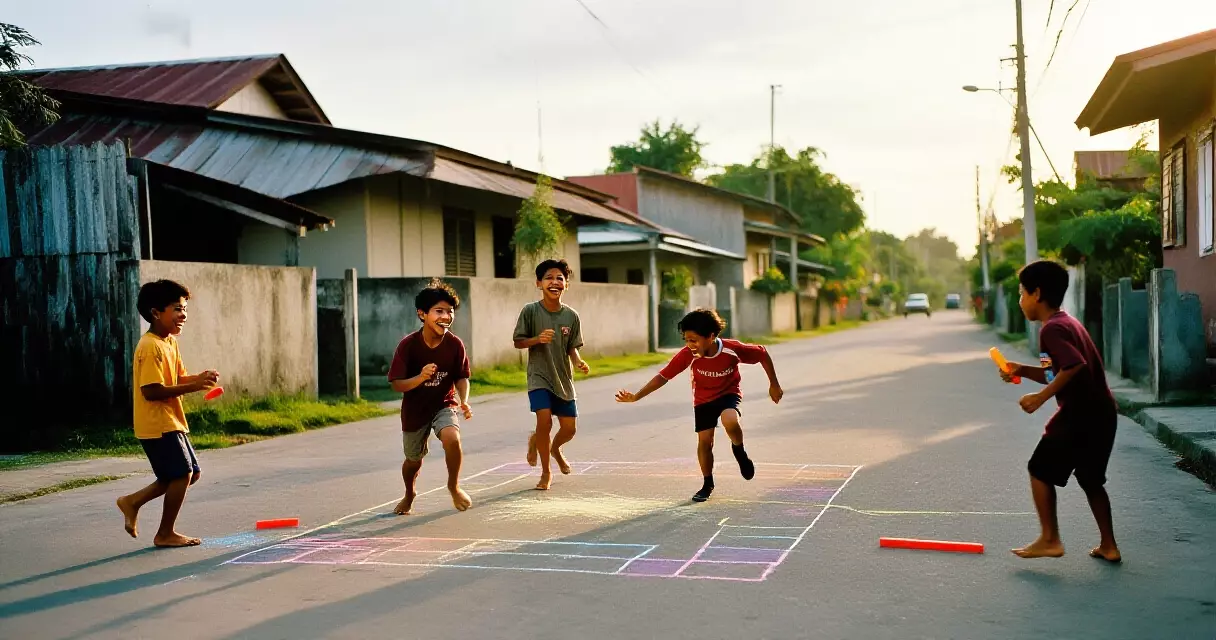
In an era where almost every Filipino child holds a smartphone, an important question arises this June 18, 2026: where are the games of the past that once echoed in the alleys every afternoon? According to Wikipedia, traditional Filipino games...
Table of contents
- 1 What are the games of the past and the “games of the race”?
- 2 A brief history of the games of the past in the Philippines
- 3 The most popular games of the past and how to play them
- 3.1 Patintero (Harangang Taga or Tubigan)
- 3.2 Tumbang preso (Presohan or Tumba-Lata)
- 3.3 Luksong tinik and piko
- 4 Table: Games of the past, materials, and regional names
- 5 Why the games of the past are gradually disappearing among today’s youth
- 6 The revival of the games of the past (2025–2026)
- 7 The benefits of the games of the past on health and learning
- 8 How to revive the games of the past at home and school
- 8.1 For parents and families
- 8.2 For schools and communities
- 9 Games of the past vs. games of today: a realistic comparison
- 10 Frequently asked questions about the games of the past
- 10.1 What does “games of the race” mean?
- 10.2 Is patintero the national game of the Philippines?
- 10.3 What is the difference between patintero and tumbang preso?
- 10.4 Why is it important to revive the games of the past?
- 11 Conclusion: the legacy of the games of the past in the digital generation
- 12 References
In an era where almost every Filipino child holds a smartphone, an important question arises this June 18, 2026: where are the games of the past that once echoed in the alleys every afternoon? According to Wikipedia, traditional Filipino games such as patintero, tumbang preso, piko, and sipa are primarily played as children’s games passed down from generation to generation. This guide is a deep reflection on the games of the past – what they are, how to play them, why they are gradually disappearing, and how they are being revived in 2025 to 2026.
It’s not just a matter of nostalgia. For Laro Hub, the games of the past are part of the broader story of gaming in the Philippines – from street games to modern mobile and PC titles we follow daily. By understanding the origins of Filipino play, we can better understand why the gaming culture in the country is so deep.
What are the games of the past and the “games of the race”?
The term games of the past generally refers to traditional Filipino games or what are also called “games of the race” – games played by children before the era of video games and the internet. Based on data from Wikipedia, these games are often played outside the house and use only simple materials such as stones, wood, bottle caps, rubber, or chalk.
The main characteristic of the games of the past is their affordability and social nature. They do not require expensive equipment; instead, the players themselves and their creativity become the heart of the game. According to data analyzed by educational references, these games are typically “intergenerational” or passed down within the family and community, not through formal sports club systems.
- Played outdoors: streets, yards, plazas, or any wide space.
- Uses simple or natural materials that are easy to find.
- Focuses on cooperation, strategy, and physical movement.
- No formal fees or registration – free and open to all.
A brief history of the games of the past in the Philippines
The history of the games of the past is as old as the culture of Filipino communities. Before the advent of electronic entertainment, street games were the main activity of the youth every afternoon and during vacations. An important fact: according to Wikipedia, the modern design of the yoyo is attributed to the Filipino inventor Pedro Flores, and the name “yo-yo” is said to originate from the Ilocano language.
Another historical note: based on references presented by Wikipedia, sipa was considered the national game of the Philippines until 2009. This shows that some of the games of the past were not only entertainment but also officially recognized as part of the national identity. Currently, agencies like the NCCA consider these games as part of the country’s intangible cultural heritage.
On a global scale, the concept of “intangible cultural heritage” used by UNESCO emphasizes the importance of preserving traditions passed down through generations – including traditional games. This is why documenting the rules and regional versions of the games of the past becomes more important than just reminiscing.
The most popular games of the past and how to play them
Many of the games of the past are still alive today in some communities. Here are the most popular examples, along with explanations on how to play them based on educational references and Wikipedia.
Patintero (Harangang Taga or Tubigan)
Patintero, also known as Harangang Taga or Tubigan in some regions, is one of the most favorite games of the past among Filipino children. According to references, it is played by two groups: the attack team and the defense team, with five players each. The goal of the attack team is to cross the lines from the home base to the back and return without being caught by the guards. It requires speed, reading the opponent’s movements, and coordination of the entire group.
Tumbang preso (Presohan or Tumba-Lata)
Also called presohan in Luzon and tumba-patis or tumba-lata in some parts of the Visayas, tumbang preso is one of the most popular street games. Players use slippers as a tool to knock down a can in the middle. There is one “taya” who guards the can, while others try to knock it down and retrieve their slippers without being tagged. It is a game that teaches timing, strategy, and speed.
Luksong tinik and piko
Luksong tinik means “jumping over thorns.” Two players serve as the base by stacking their feet and hands, gradually rising to resemble “thorns.” Other players jump over it without touching. Meanwhile, piko is equivalent to hopscotch – it is played on a line drawn on the ground or cement using chalk or stone, and the player jumps according to the shape of the line.
Aside from these, the list of games of the past also includes sungka (using a wooden board and small stones or shells), Chinese garter, taguan, langit-lupa, sipa, turumpo, and palosebo. Each has its unique mechanics and lessons passed on to children.
Table: Games of the past, materials, and regional names
Based on data from Wikipedia and educational references, here is a summary of some popular games of the past, along with the necessary materials and their regional names.
| Game | Materials | Regional name | Number of players |
|---|---|---|---|
| Patintero | Lines on the ground (chalk/water) | Harangang Taga, Tubigan | 2 groups, 5 each |
| Tumbang preso | Can and slippers (tool) | Presohan, Tumba-Lata, Tumba-Patis | 3 or more |
| Luksong tinik | Hands and feet only | Luksong Baka (version) | 4 or more |
| Piko | Stone and chalk | — | 1 or more |
| Sungka | Wooden board, stones/shells | — | 2 |
| Sipa | Round tool (rattan/rubber) | — | 1 or more |
It is important to note that many versions of these games exist depending on the region – names and rules vary across Luzon, Visayas, and Mindanao. This is one of the reasons why cultural advocates emphasize documenting each local version.
Why the games of the past are gradually disappearing among today’s youth
It is undeniable that the number of children playing games of the past is decreasing. Based on observations and educational discussions, there are several main reasons explaining the decline in playing traditional games today.
- Increase in screen-based entertainment. The expansion of smartphones, mobile games, and video streaming shifts children’s time from outdoors to indoors.
- Urbanization and lack of space – fewer yards and safe streets for street games in cities.
- Parental safety concerns preventing children from playing outside alone.
- Lack of knowledge transfer – without teaching the rules, the game is lost to the next generation.
In the context of Laro Hub, the contrast between games of the past and the current gaming trend is interesting. For example, in our analysis of the Top 5 mobile games in the Philippines, the rise of digital games is evident – a clear contrast to the affordable street games of the past.
The revival of the games of the past (2025–2026)
The good news: the games of the past are not completely disappearing. From 2025 to 2026, there is a growing movement to revive traditional games. Based on cultural policy discussions of the NCCA, Filipino games are now being placed in the broader context of cultural identity and transmission across generations – not just as a P.E. activity.
Here are the main revival trends seen in 2026:
- Clearer framing of traditional games as heritage preservation, not just entertainment.
- Increase in community-led and LGU-led heritage events featuring patintero, tumbang preso, piko, and sipa.
- Growing interest in “screen-free play” as a response to excessive gadget time.
- Increase in digital documentation and educational content standardizing the rules and history of the games.
Interestingly, the theme of nostalgia also extends to modern gaming. In our Alabaster Dawn review, it shows how modern games try to evoke the same sense of excitement brought by playing in our childhood. This shows that the value of the games of the past extends even to the design of current titles.
The benefits of the games of the past on health and learning
Aside from nostalgia, the games of the past have real benefits for children’s health and development. Based on educational references such as modules reviewed by DepEd, these games teach teamwork, strategy, and sportsmanship while providing physical exercise.
- Physical health: patintero, luksong tinik, and sipa require running, jumping, and coordination – helping against a sedentary lifestyle.
- Social skills: children learn cooperation, rule negotiation, and respect for opponents.
- Thinking and strategy: many games require quick planning and reading others’ movements.
- Cultural identity: language, traditions, and community creativity are passed on.
In educational discourse, these games are also seen as a solution to the growing screen dependence. Schools use the games of the past as a tool for physical literacy and culture-based learning, as shown by their continued use in programs related to Filipino values and P.E.
How to revive the games of the past at home and school
There’s no need to wait for a big event to revive the games of the past. Here are practical steps for parents, teachers, and community organizers.
For parents and families
- Set a “screen-free” time every weekend and teach a street game like piko or tumbang preso.
- Share personal experiences – stories of playing in childhood can encourage children.
- Use simple household items: cans, slippers, chalk, or rubber.
For schools and communities
- Include Filipino games in P.E. and school cultural festivals.
- Organize a “Laro ng Lahi” day where different generations come together.
- Document local versions of the games to preserve regional differences.
Local cultural festivals are one of the most effective ways to revive traditions. For inspiration, check out our guide to Geek+Pop PICCS and Resbak 2026, where gaming culture and community are brought together in a physical space – a modern version of the spirit of collective play.
Games of the past vs. games of today: a realistic comparison
To better understand the value of the games of the past, here is a comparison between traditional street games and modern digital games. It’s not about which is better, but how they complement each other.
| Aspect | Games of the past (traditional) | Games of today (digital) |
|---|---|---|
| Cost | Free or very cheap | With data, device, or in-app fees |
| Location | Outdoors: streets, yards | Anywhere, usually indoors |
| Physical movement | High (run, jump) | Low to moderate |
| Social interaction | Face-to-face, physical | Online or remote |
| Requirements | Simple materials only | Device and internet |
In fact, many modern players are seeking balance. The growing scene of Pinoy gaming, which we follow in our complete guide to gaming in the Philippines, shows that the games of the past and digital games are not adversaries – they are both part of the rich gaming culture of Filipinos.
Frequently asked questions about the games of the past
What does “games of the race” mean?
“Games of the race” is an umbrella term for traditional Filipino games passed down from generation to generation, including patintero, tumbang preso, piko, luksong tinik, and sipa.
Is patintero the national game of the Philippines?
No. According to references, sipa was considered the national game until 2009. Patintero is just one of the most popular street games, but it is not officially the national game.
What is the difference between patintero and tumbang preso?
Patintero is a team game focused on crossing lines without being caught. Tumbang preso focuses on knocking down a can with a slipper while avoiding being tagged by the “taya.”
Why is it important to revive the games of the past?
Reviving the games of the past helps with physical health, social skills, and preserving the cultural identity of the Philippines, especially in an era of increasing screen dependence.
Conclusion: the legacy of the games of the past in the digital generation
The games of the past are not just memories of the past – they are a living part of Filipino gaming culture that continues to be revived in 2026. From patintero in the streets to the latest mobile titles, the spirit is the same: the joy of collective play.
Here are the key lessons from this guide:
- The games of the past are affordable, social, and deeply rooted in the cultural heritage of the Philippines.
- They have real benefits for children’s health, strategy, and identity.
- In 2025–2026, the revival is gaining strength through NCCA, DepEd, and community events.
- They can be revived in simple ways – at home, in schools, and local celebrations.
At Laro Hub, we believe that understanding the games of the past enriches our perspective on modern gaming. It is proof that the Filipino love for play is eternal – only the form changes, but not the heart.
References
- Traditional games in the Philippines – Wikipedia – retrieved on June 18, 2026
- National Commission for Culture and the Arts (NCCA) – retrieved on June 18, 2026
- Department of Education (DepEd) – retrieved on June 18, 2026
- UNESCO Intangible Cultural Heritage – retrieved on June 18, 2026