
Summary
Sungka and dama are two games deeply rooted in the heart of Filipino culture — and in 2026, they have resurfaced in a new form. No longer are they just played in backyards or under trees; now, the new trend...
Table of contents
- 1 History of Sungka and Dama in the Philippines
- 2 How to Set Up Sungka: Basic Rules
- 3 How to Set Up Dama: Basic Rules
- 4 Modern Tips for Sungka: Strategy and Mental Thinking
- 4.1 Study the Sowing Pattern
- 4.2 Protect Your Store
- 5 Modern Tips for Dama: Board Control and Forced Captures
- 5.1 Control the Center of the Board
- 5.2 Use Forced Captures
- 6 Online Play Setup: How to Play Sungka and Dama Digitally
- 7 Sungka and Dama in the Diaspora: The Game Outside the Philippines
- 8 Formal Tournaments and Conduct Rules for Dama
- 9 Comparison of Sungka and Dama: Which is Easier to Learn?
- 10 Materials and Improvised Setup for 2026
- 11 Frequently Asked Questions (FAQ)
- 11.1 What is the difference between sungka and congkak?
- 11.2 How many counters are needed for sungka?
- 11.3 Can sungka and dama be played online?
- 11.4 How to win in sungka?
- 11.5 How to become a king in dama?
- 11.6 What are the important conduct rules in a dama tournament?
- 12 References
Sungka and dama are two games deeply rooted in the heart of Filipino culture — and in 2026, they have resurfaced in a new form. No longer are they just played in backyards or under trees; now, the new trend in sungka and dama can be found in online tutorials, digital setups, and formal tournaments. This article serves as a guide for those who want to learn modern tips and online play setups for these two highly valued traditional games in the Philippines today in 2026.
History of Sungka and Dama in the Philippines
Sungka is one of the oldest known games in the Philippines, part of the mancala games family spread throughout Southeast Asia. According to research documented at the Neure Research Center (April 2025), sungka is considered a national heritage — a game with deep roots in the history and knowledge of ancient Filipinos. Dama, on the other hand, is related to international checkers, a strategy game played on an 8×8 board with diagonal movement of pieces.
How to Set Up Sungka: Basic Rules
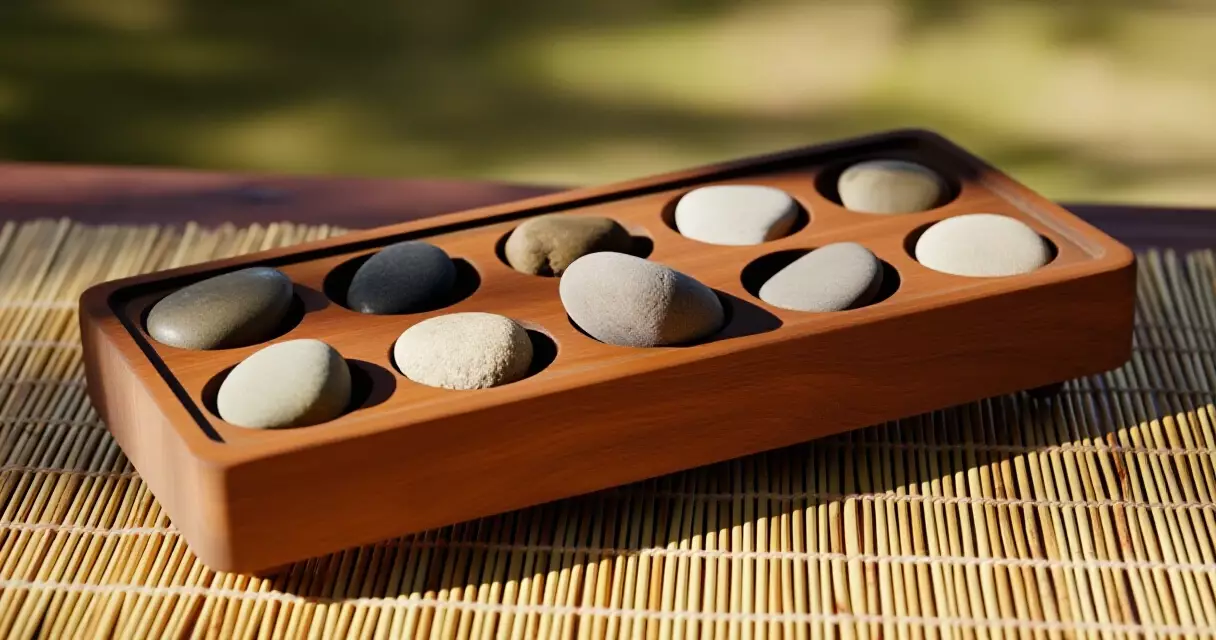
Before learning the new trends in sungka and dama, it is important to know the correct setup. Based on materials from the University of Batangas (BSMA 2101), sungka is played by two players on a board with 14 small pits and two large stores. Each player has seven pits on their side. At the start of the game, each pit is filled with 7 counters — which can be shells, stones, or seeds — leaving the stores empty.
The movement in sungka is counterclockwise, which is one of its main differences from Congkak played in Malaysia and Indonesia. The player takes all the counters from the chosen pit and distributes them one by one in each subsequent pit in a counterclockwise direction, including their own store but not the opponent’s store.
How to Set Up Dama: Basic Rules
Dama is played on an 8×8 board with 12 pieces per player, according to records from the University of Batangas. The pieces are placed on the dark squares of the first three rows closest to each player. Movement is diagonally forward only, and capturing an opponent’s piece is done by jumping over it to an empty square on the opposite side.
When a piece reaches the farthest row of the opponent, it is “crowned” or becomes a “king” — and can then move diagonally forward and backward. Consecutive captures in one turn are allowed when there is an available jump after the first capture.
Modern Tips for Sungka: Strategy and Mental Thinking
Study the Sowing Pattern
The most effective modern tip for sungka is to learn pattern recognition — the ability to predict where your counters will end up after a move. Beginners often think one or two steps ahead; experienced players plan three to five steps ahead. Start by practicing with the number of counters in each pit and track where they will end up according to the counterclockwise direction.
Protect Your Store
The store is the most important part of your side. In modern strategy, the goal is always to have a move that ends in your store — because when this happens, you get a free extra move. Repeated moves that end in the store provide a significant advantage in points.
Modern Tips for Dama: Board Control and Forced Captures
Control the Center of the Board
In dama, controlling the center of the board provides more options for movement and capture. Avoid placing all your pieces on the edges — they are difficult to move and can become trapped without the ability to move.
Use Forced Captures
According to the rules of dama recorded in the Scribd presentation on the history and rules of sungka and dama, forced captures are allowed — so you can make a series of jumps in one turn. Use this to your advantage: look for positions where your piece can capture two or three of the opponent’s pieces in one move.
Online Play Setup: How to Play Sungka and Dama Digitally
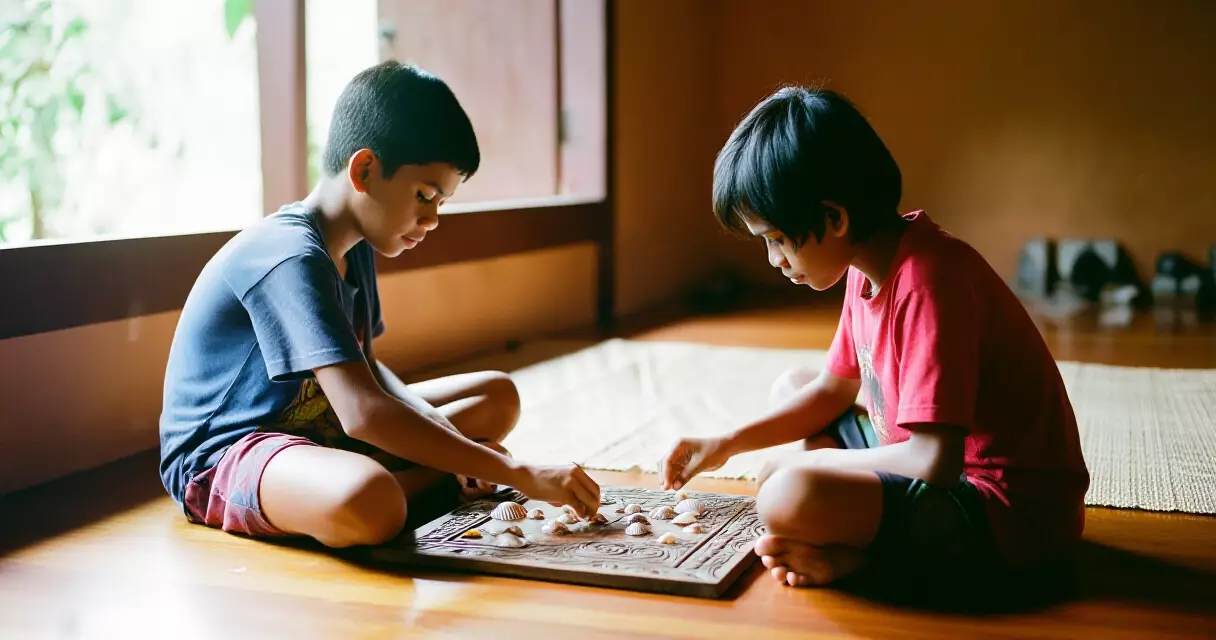
One of the biggest parts of the new trend in sungka and dama in 2026 is the transition of these games into the digital space. While there are not yet as many digital platforms for sungka and dama compared to mainstream mobile games, there are several ways to play online.
For those who want to try the digital version of dama (checkers), international checkers platforms on web browsers are available — providing an opportunity to practice against AI before competing against others. For sungka, instructional videos on YouTube (such as those taught by teachers in the video tutorial of Filipino Game: Sungka) can be used as a guide for setting up a virtual game using video call platforms.
Sungka and Dama in the Diaspora: The Game Outside the Philippines
According to information listed in the documentation on Scribd about sungka and dama, sungka is also played by Filipino migrants in Macau, Taiwan, Germany, and the USA. This shows that the cultural reach of the game is expanding not only within the Philippines — but also among communities of overseas Filipino workers and the diaspora.
This fact opens the door for online play setups — particularly for families in different countries who want to maintain a connection to Filipino culture through traditional games. Using video calls and digital boards is a practical solution for this. For those curious about other types of Filipino gaming culture that connect Filipinos, read our feature on Top 5 Most Downloaded Mobile Games in the Philippines (2026).
Formal Tournaments and Conduct Rules for Dama
One of the noticeable new trends in sungka and dama in 2026 is the rise of formality in dama tournaments. Based on the ground rules listed in the Scribd presentation, formal dama games have clear conduct rules: the use of cell phones or any electronic communication device while playing is prohibited, disturbing the opponent is not allowed, any form of betting within the playing area is banned, and spectators are requested to leave the playing area during an active game.
Sungka and dama are not just pastimes — they are part of our identity as Filipinos, and studying them is also studying our history.
Comparison of Sungka and Dama: Which is Easier to Learn?
| Characteristic | Sungka | Dama |
|---|---|---|
| Type of game | Mancala (counting game) | Checkers variant (strategy) |
| Number of players | 2 | 2 |
| Setup | 14 pits + 2 stores, 7 counters per pit | 8×8 board, 12 pieces per player |
| Movement | Counterclockwise sowing | Diagonal, forward (king: forward + backward) |
| Capture | No direct capture; wins by points | Jump over opponent’s piece |
| Difficulty level for beginners | Moderate | Moderate to high |
| Available online | Limited; video-based tutorials | More digital platforms |
For those looking for additional guidance on other aspects of Pinoy gaming culture, visit our page on Short Game Recommendations 2026 for fun short games suitable for all ages.
Materials and Improvised Setup for 2026
One of the great features of sungka and dama is the ability to create a game using simple materials. According to records from the University of Batangas, items that can be used as counters for dama include bottle caps, coins, and wooden pieces. For sungka, stones, seeds, and shells are all acceptable.
| Game | Traditional Materials | Modern Alternative |
|---|---|---|
| Sungka | Wooden board, shells, stones | Egg carton as board, beans/marbles as counters |
| Dama | Wooden board, wooden pieces | Paper board, bottle caps, coins |
In the age of smartphones and online games, returning to sungka and dama is like making space for deeper human connection — even if done digitally.
Frequently Asked Questions (FAQ)
What is the difference between sungka and congkak?
According to the history and rules of sungka and dama, sungka is played in a counterclockwise direction, while congkak (played in Malaysia and Indonesia) is clockwise. There are also some minor rule differences that distinguish the two.
How many counters are needed for sungka?
Based on materials from the University of Batangas, the traditional setup is 7 counters per pit, meaning 98 counters are needed for the total 14 pits (excluding the stores).
Can sungka and dama be played online?
Currently, dama has more digital platforms compared to sungka. For sungka, the most practical online setup is using a video call (e.g., Zoom or Google Meet) along with a physical board for each player. For dama, there are web-based checkers games available, but not all use the exact Filipino dama rules.
How to win in sungka?
Winning in sungka is based on having the most counters in your store at the end of the game. The key is to always look for a move that brings the last counter into your store — as this provides an additional free move.
How to become a king in dama?
According to the rules of dama, a piece becomes a king when it reaches the farthest row of the opponent. Once crowned as a king, it can move diagonally forward and backward — providing a significant advantage in the game.
What are the important conduct rules in a dama tournament?
Based on documented ground rules for dama, the use of cell phones, disturbing the opponent, and any form of betting within the playing area are prohibited. Spectators are also required to stay away from the playing area during an active game. These rules reflect the view of dama as a serious competitive game.
References
- History and Rules of Sungka and Dama (Scribd presentation) — retrieved on August 11, 2026
- BSMA 2101: Traditional Filipino Games — University of Batangas (Studocu) — retrieved on August 11, 2026
- Ang Larong Sungka Bilang Pamanang Bayan — Neure Research Center (April 2025) — retrieved on August 11, 2026
- Filipino Game: Sungka — Video Tutorial (YouTube) — retrieved on August 11, 2026